



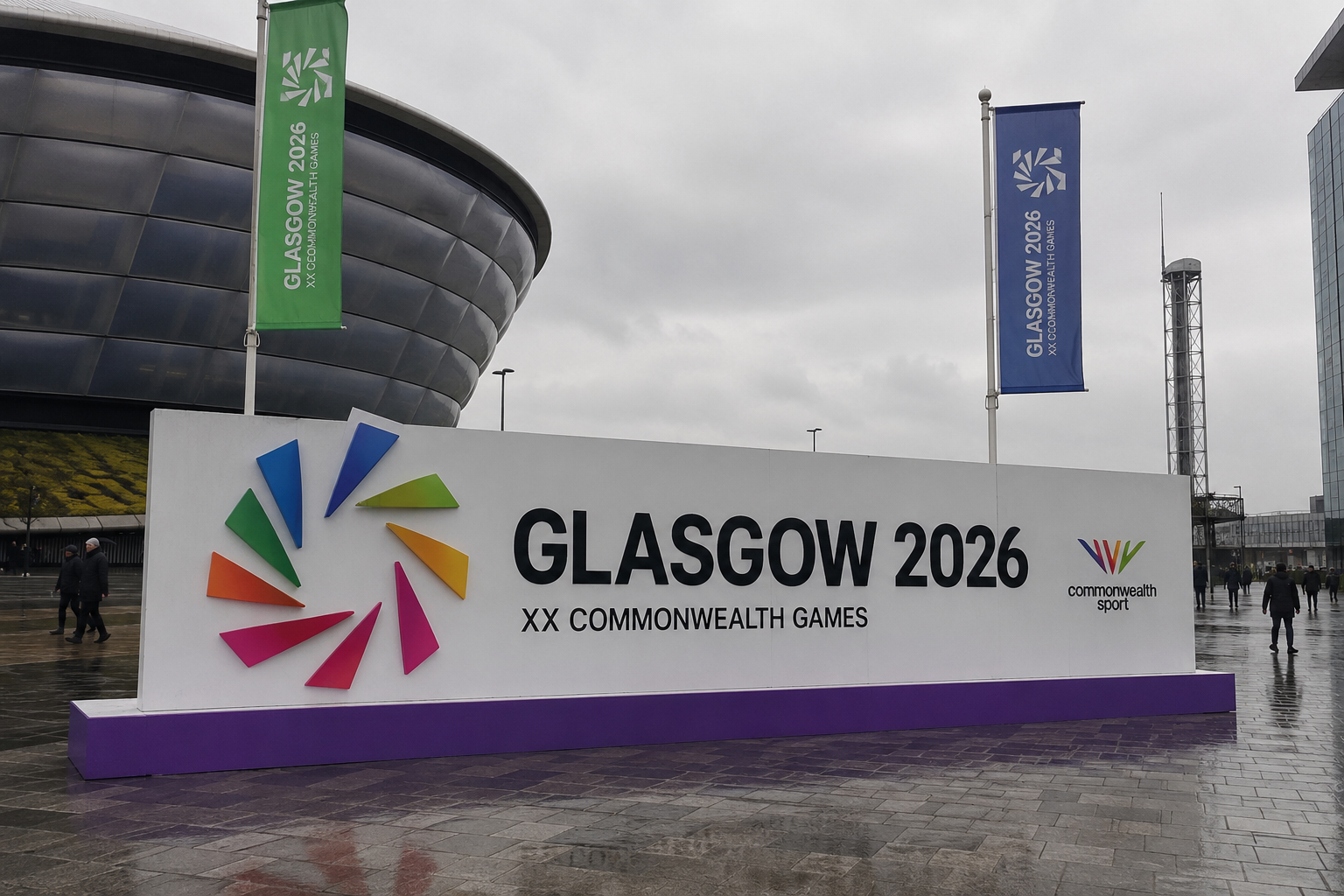

The Commonwealth Games 2026 will bring athletes from across the Commonwealth together in Glasgow, Scotland, from July 23 to August 2, featuring a compact programme of 10 sports and a new approach to hosting the international sporting event.
The Commonwealth Games 2026 is set to be one of the major sporting events of the year, bringing together athletes from Commonwealth nations and territories for a celebration of sports, culture, and international friendship. The Games will be hosted in Glasgow, Scotland, from July 23 to August 2, 2026.
The 2026 edition will introduce a significantly different format compared with several previous Commonwealth Games. Instead of featuring a large number of sports, the event will focus on a compact programme of 10 sports. The new approach is designed to make the Games more efficient, sustainable, and financially manageable while continuing to provide a major international platform for athletes.
Glasgow to Host the Commonwealth Games 2026
Glasgow has been selected to host the 2026 Commonwealth Games, marking the return of the event to Scotland after the city successfully hosted the Games in 2014.
The 2026 edition will make use of existing sporting facilities and venues in Glasgow. Using established infrastructure is expected to help reduce the costs associated with constructing new venues and organizing a large-scale multi-sport event.
Glasgow’s previous experience in hosting the Commonwealth Games and other major sporting competitions gives the city valuable expertise in managing international events. The return of the Games is also expected to generate interest among sports fans and visitors from across the Commonwealth.
A New and Compact Format
One of the most notable features of the Commonwealth Games 2026 is its compact sports programme. The event will feature competitions across 10 sports, representing a significant change from some recent editions that included a much larger number of disciplines.
The sports programme includes:
- Athletics and Para Athletics
- Aquatics and Para Aquatics
- Artistic Gymnastics
- Boxing
- Judo
- Netball
- Cycling Track & Para Cycling Track
- Bowls and Para Bowls
- 3×3 Basketball and 3×3 Wheelchair Basketball
- Weightlifting
The inclusion of para-sport events highlights the Commonwealth Games’ continued commitment to creating opportunities for athletes with disabilities and promoting inclusive sport.
The smaller sports programme is intended to reduce the scale and complexity of the event while maintaining a strong level of international competition. The Glasgow model could also provide useful lessons for the future organization of major multi-sport events.
India at the Commonwealth Games 2026
The Commonwealth Games 2026 will be closely followed by Indian sports fans. India has traditionally been one of the strongest sporting nations at the Commonwealth Games, with athletes performing particularly well in disciplines such as shooting, wrestling, badminton, boxing, weightlifting, table tennis, and athletics.
However, the 2026 edition will be different for India because several of the country’s traditional medal-winning sports are not included in the programme. Shooting and wrestling, for example, are not part of the 10-sport schedule for Glasgow 2026. Badminton is also absent from the programme.
Despite these changes, Indian athletes will have opportunities to compete for medals in sports such as boxing, table tennis, weightlifting, athletics, aquatics, artistic gymnastics, judo, and para-sport events.
The performance of India’s emerging athletes will be one of the major areas of interest during the Games. The event could provide young Indian competitors with valuable international experience and an opportunity to establish themselves on the global sporting stage.
For Indian sports fans, the Games will also be an opportunity to follow the progress of athletes who could become future stars in international competitions.
Why the Commonwealth Games Matter
The Commonwealth Games are more than just a sporting competition. They provide athletes from different countries and territories with an opportunity to compete in a spirit of friendship, mutual respect, and international cooperation.
For many athletes, the Commonwealth Games represent an important stage in their sporting careers. Competing at a major international event can help athletes gain experience, confidence, recognition, and exposure.
The Games can also create wider economic and social opportunities for host cities. International sporting events can attract tourists, support local businesses, create employment opportunities, and promote the host city’s cultural and sporting identity.
For Glasgow and Scotland, hosting the 2026 Commonwealth Games provides another opportunity to showcase the region’s sporting facilities and international event management capabilities.
Focus on Sustainability and Cost Efficiency
The Commonwealth Games 2026 are being organized under a different financial and operational model. The use of existing venues and a reduced sports programme is intended to lower the cost and complexity of hosting a major international sporting event.
In recent years, there has been increasing discussion about the financial challenges associated with hosting large multi-sport competitions. The construction of new stadiums, athlete villages, and temporary infrastructure can place significant financial pressure on host cities.
The Glasgow model aims to address some of these challenges by making greater use of existing facilities. This approach could help demonstrate how major sporting events can be organized with a stronger focus on sustainability, cost efficiency, and responsible use of infrastructure.
If successful, the 2026 Games could influence how future Commonwealth Games are planned and hosted.
Opportunities for Young Athletes
The Commonwealth Games 2026 will also provide an important platform for young athletes. Emerging competitors will have the opportunity to compete against experienced athletes from across the Commonwealth.
For younger sportspeople, participating in a major international event can be an important milestone. It can help them develop competitive experience, understand the demands of elite sport, and prepare for future international championships.
The Games can also inspire young people to take an interest in sports. This is particularly important for encouraging participation at the grassroots level, including in rural and smaller communities.
Young athletes who watch the Commonwealth Games may be motivated to pursue careers not only as competitors but also in coaching, sports science, fitness, sports management, and other areas of the sporting industry.
What to Expect from Commonwealth Games 2026
As the event approaches, attention will increasingly focus on participating nations, athlete selections, competition schedules, and medal contenders. Sports fans will be watching closely to see which athletes emerge as the stars of the Games.
The return of the Commonwealth Games to Glasgow is expected to attract considerable interest because of the city’s previous experience in hosting the event.
For India, the Games will be an opportunity to assess the progress of its athletes in the sports included in the 2026 programme. The absence of some traditional medal sports will make India’s campaign different from previous editions, while athletes in boxing, table tennis, weightlifting, athletics, aquatics, judo, gymnastics, and para-sports will have an opportunity to make their mark.
The Games could also provide a platform for a new generation of Indian sporting talent to gain international exposure and inspire young people across the country to take up sports.
Conclusion
The Commonwealth Games 2026 in Glasgow will mark a new chapter in the history of the Commonwealth sporting movement. With a compact 10-sport programme, existing venues, and a greater focus on cost efficiency and sustainability, the Games will follow a different model from several previous editions.
For athletes and sports fans, the event will remain an important international competition that brings together sporting talent from across the Commonwealth. Indian audiences will be particularly interested in the performances of the country’s athletes in the sports included in the Glasgow programme.
As Glasgow prepares to welcome athletes and spectators in July 2026, the Commonwealth Games will once again provide a platform for sporting excellence, international friendship, inclusion, and the celebration of athletic talent. The event may also offer valuable lessons for the future of major sporting competitions, showing how international events can be organized using existing infrastructure and a more focused approach.