






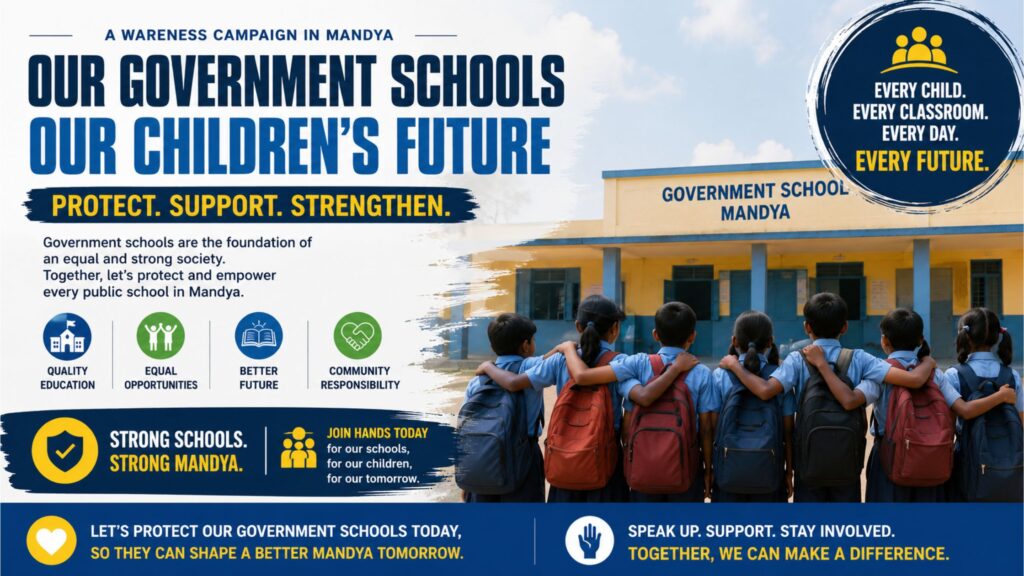
A major public awareness movement in Karnataka is drawing attention to the importance of protecting Mandya government schools as students, teachers, parents, and social organizations come together to support public education. The large-scale campaign aims to increase awareness about the role of government schools in providing affordable and quality education to rural communities across the district.
The campaign has gained momentum as concerns continue growing over declining admissions, infrastructure challenges, and the future of rural educational institutions. Public rallies, awareness programs, student participation events, and community outreach activities are being organized to encourage people to support government schools and strengthen the education system.
The movement supporting Mandya government schools reflects a wider concern regarding equal educational opportunities for children from economically weaker and rural backgrounds. Supporters of the campaign believe that strong government schools are essential for social development, literacy growth, and rural progress.
The initiative has also become a symbol of community participation in preserving public education and ensuring better opportunities for future generations.
Mandya Government Schools Become the Focus of Public Support
The growing campaign for Mandya government schools has brought together students, teachers, education activists, and local residents who believe public education remains one of the strongest foundations for rural development.
Government schools play an important role in educating children from low-income families who may not have access to expensive private education systems. In many villages, public schools are the primary educational institutions available to students.
Awareness rallies and campaigns are helping communities understand the importance of protecting these institutions from decline and improving enrollment rates.
Participants in the campaign are also emphasizing the need for better facilities, teacher support, digital learning tools, and stronger community involvement in school development.
The movement is not only about protecting school buildings but also about safeguarding educational equality and social inclusion.
Public education experts believe government schools continue serving as essential platforms for empowering rural children through accessible learning opportunities.
Importance of Government Schools in Rural Karnataka
The discussion surrounding Mandya government schools highlights the broader importance of public education in rural Karnataka.
Government schools provide educational access to thousands of children who depend on affordable schooling systems for their future. These institutions often serve remote villages and economically weaker sections where private educational options may be limited or financially inaccessible.
Teachers working in government schools frequently contribute beyond classroom teaching by encouraging social awareness, literacy campaigns, and student welfare activities.
Educational equality remains one of the strongest advantages of public schooling because it creates opportunities for students from diverse backgrounds to learn together.
The campaign in Mandya also reflects concerns that declining enrollment in government schools may affect rural literacy and long-term social development.
Supporters believe stronger public education systems can improve employment opportunities, reduce social inequality, and strengthen village communities.
Awareness Campaigns Are Inspiring Community Participation
One of the most important aspects of the campaign supporting Mandya government schools is the active participation of local communities.
Students, parents, teachers, and social activists are participating in rallies, discussions, and awareness events aimed at promoting public education.
The campaign is helping create emotional and social connections between communities and government schools by highlighting their historical contribution to society.
Public support for schools increases when local communities feel involved in educational development and decision-making processes.
Awareness drives are also encouraging parents to enroll children in nearby government schools and support educational improvement initiatives.
Many education experts believe community involvement can significantly improve school performance, student attendance, and accountability.
The movement in Mandya demonstrates how collective participation can help address educational challenges at the grassroots level.
Challenges Faced by Government Schools
Despite their importance, Mandya government schools continue facing several challenges including declining admissions, infrastructure limitations, and competition from private educational institutions.
Some schools struggle with limited classroom facilities, teacher shortages, and inadequate digital resources. Rural migration patterns and changing parental preferences have also influenced enrollment trends in certain areas.
Education activists argue that improving infrastructure and introducing modern learning systems can help restore confidence in public education.
Government schools also require stronger investment in technology, extracurricular development, and teacher training to meet evolving educational expectations.
The awareness campaign is therefore focusing not only on emotional support but also on practical improvements necessary for long-term sustainability.
Experts believe that strengthening public schools will require collaboration between government authorities, local communities, and education organizations.
Education and Social Development Go Together
The campaign protecting Mandya government schools highlights the close relationship between education and social progress.
Strong public education systems contribute directly to literacy, employment opportunities, gender equality, and rural development. Government schools often become community centers where social awareness and developmental programs are also promoted.
Many successful professionals from rural India began their educational journey in government schools, proving the long-term importance of accessible public education.
Protecting these institutions therefore becomes essential for maintaining equal opportunities and empowering future generations.
Educational development also plays a major role in reducing poverty and supporting inclusive economic growth in rural regions.
The Mandya campaign reflects growing public understanding that education remains one of the strongest tools for social transformation.