








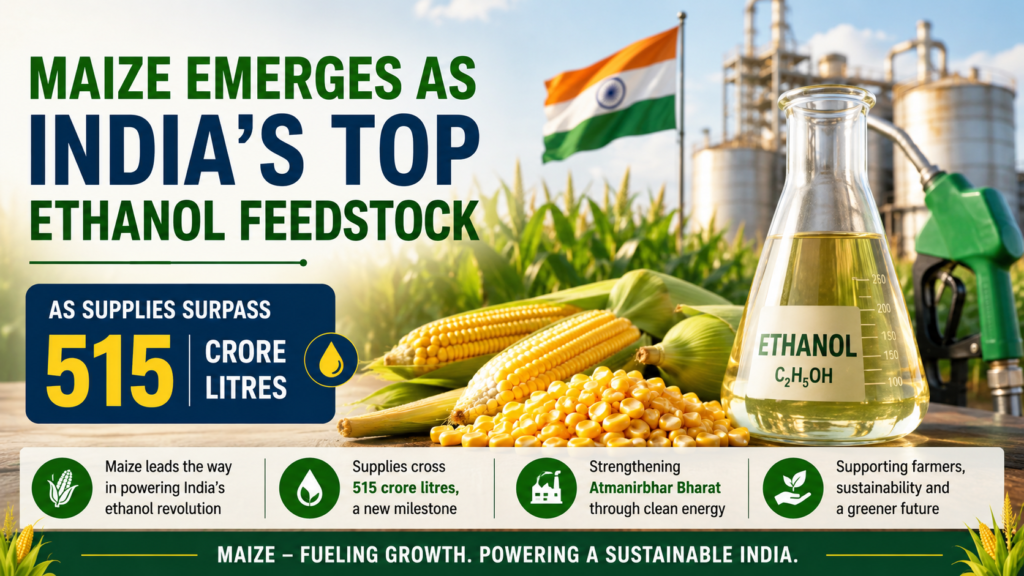
India’s ethanol industry is witnessing a major transformation as maize has emerged as the country’s leading ethanol feedstock, with supplies crossing 515 crore litres. The rapid rise of Maize Ethanol India reflects the nation’s growing commitment toward clean energy, reduced crude oil dependence, and stronger support for the agricultural economy. With the government aggressively promoting ethanol blending in petrol, maize is becoming a reliable and scalable alternative to traditional sugar-based ethanol production.
The increasing adoption of maize for ethanol production is not only strengthening India’s renewable energy goals but also creating new opportunities for farmers and agri-based industries. Industry experts believe that the expansion of ethanol distilleries and biofuel infrastructure will further accelerate rural economic development while supporting India’s long-term sustainability targets. As fuel demand rises and environmental concerns continue to grow, maize-based ethanol is quickly becoming a strategic pillar in India’s energy transition.
Why Maize Is Becoming the Preferred Ethanol Feedstock
The growing success of Maize Ethanol India is largely driven by the crop’s availability, high starch content, and efficient conversion into ethanol. Unlike sugarcane, maize requires comparatively less water and offers more stable year-round production. This makes it a sustainable and scalable solution for meeting India’s rising ethanol demand.
India’s Ethanol Blended Petrol Programme has significantly increased the need for alternative feedstocks. With the country aiming to strengthen energy security and reduce fuel imports, maize has emerged as a practical option capable of supporting higher ethanol blending targets. Several ethanol manufacturers are now investing heavily in maize-processing facilities to meet future demand.
The government’s continued focus on renewable energy policies, farmer support programs, and domestic biofuel production has also encouraged greater maize cultivation across multiple states. As a result, the role of maize in India’s green fuel economy is expanding rapidly.
Maize Ethanol India Strengthens Rural Economy
One of the biggest advantages of the Maize Ethanol India boom is its positive impact on rural communities and agricultural income. Increased demand for maize creates stable market opportunities for farmers, helping them secure better prices and consistent demand throughout the year.
The expansion of maize procurement by ethanol plants is improving supply chain networks in rural regions and encouraging agricultural modernization. Farmers are increasingly viewing maize cultivation as a profitable alternative due to rising industrial demand linked to the biofuel sector.
The ethanol industry is also generating employment opportunities in logistics, transportation, warehousing, and processing industries. This broader economic impact supports rural development while contributing to India’s larger vision of self-reliance and sustainable industrial growth.
Environmental Benefits of Maize-Based Ethanol
The rise of maize ethanol production offers significant environmental advantages. Ethanol blending helps lower greenhouse gas emissions and reduces dependence on fossil fuels. As India pushes toward cleaner transportation solutions, maize-based biofuel is playing an important role in reducing carbon intensity in the fuel sector.
Compared to conventional petroleum fuels, ethanol burns cleaner and contributes to improved air quality. The expansion of Maize Ethanol India also supports India’s climate commitments and renewable energy targets. Industry analysts believe that increasing ethanol usage could help India achieve long-term sustainability goals while creating a balanced energy ecosystem.
The adoption of cleaner fuels is especially important for rapidly growing economies like India, where energy consumption continues to rise alongside urbanization and industrial expansion.
Challenges Facing India’s Ethanol Expansion
Despite the impressive growth, the ethanol sector still faces several challenges. Supply chain management, storage infrastructure, transportation efficiency, and fluctuating maize prices remain key concerns for the industry. Maintaining a balance between food security and industrial demand is another important issue policymakers must address carefully.
Experts also emphasize the need for advanced ethanol technologies and stronger investments in biofuel infrastructure. To ensure the long-term success of Maize Ethanol India, continuous policy support and sustainable farming practices will be essential.
However, with increasing government backing and strong private-sector investments, the industry is expected to overcome these hurdles and continue its rapid expansion in the coming years.
Future Outlook for India’s Biofuel Industry
India’s ethanol market is expected to witness substantial growth over the next decade as fuel blending targets continue to increase. The success of maize-based ethanol production highlights the country’s ability to build a diversified and sustainable biofuel ecosystem.
With ethanol supplies already surpassing 515 crore litres, India is positioning itself as a major global player in renewable fuel production. The continued rise of Maize Ethanol India could significantly strengthen the nation’s energy independence while supporting farmers, industries, and environmental sustainability.
Businesses connected to agriculture, logistics, renewable energy, and rural supply chains are also expected to benefit from the growing biofuel economy. This transformation represents a major step toward a cleaner and more self-reliant India.