








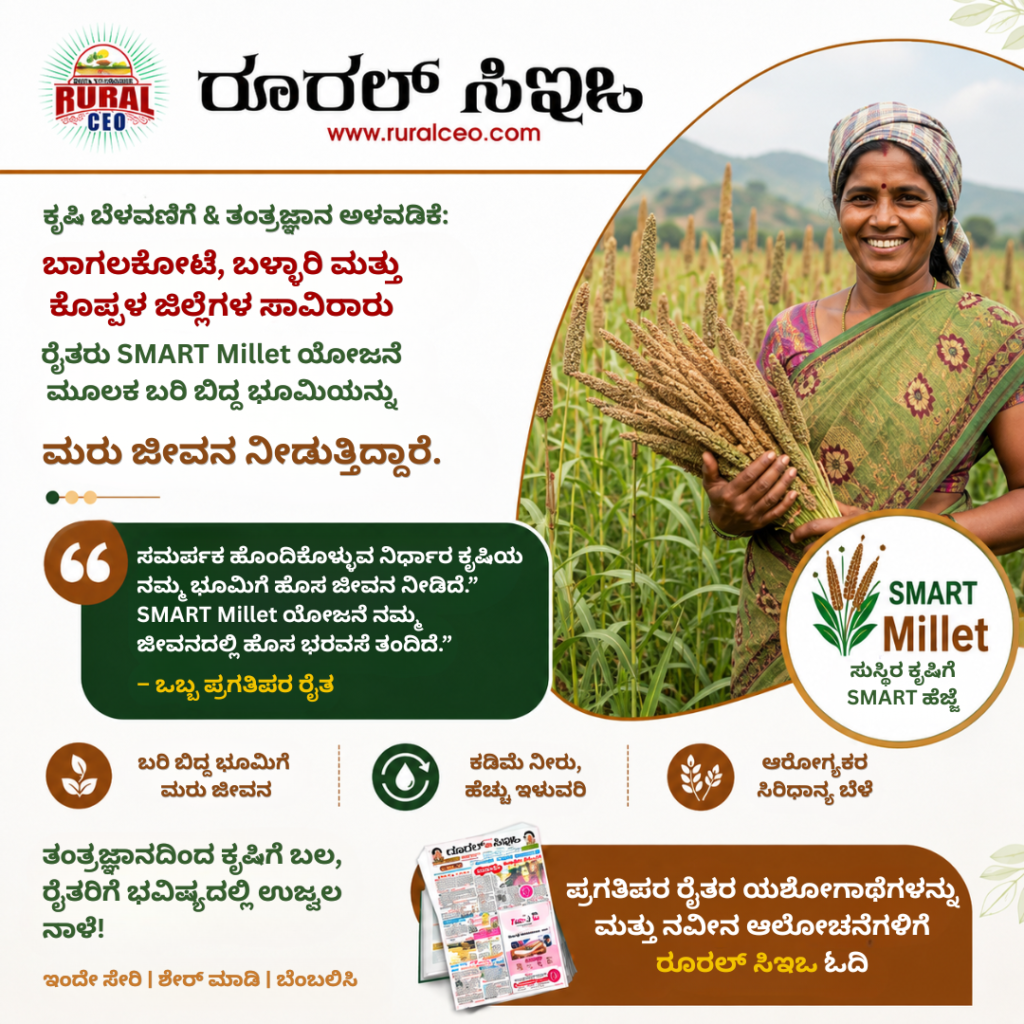
SMART Millet Technology is transforming modern agriculture by helping farmers adopt climate-resilient and sustainable farming practices. In regions affected by drought, water scarcity, and declining soil fertility, millet farming has emerged as a powerful solution for improving agricultural productivity and farmer income. The introduction of SMART Millet Technology is supporting thousands of farmers in Karnataka and across India by improving crop resilience, reducing water usage, and increasing long-term sustainability.
Districts such as Bagalkot, Ballari, and Koppal have witnessed remarkable agricultural transformation through millet cultivation projects focused on climate-smart farming. Farmers who once struggled with drought-hit lands are now successfully reviving agriculture through innovative millet farming methods. SMART Millet Technology combines traditional crop wisdom with modern agricultural techniques to create profitable and environmentally sustainable farming systems.
The Rise of SMART Millet Technology in Indian Agriculture
India has a long history of millet cultivation, but modern agricultural trends shifted farmers toward water-intensive crops over the years. However, changing climate conditions and increasing water shortages have forced many farmers to reconsider sustainable alternatives.
SMART Millet Technology has reintroduced millet farming as a practical and profitable agricultural solution. Millets require less water, adapt well to dry climates, and offer strong resistance to extreme weather conditions. This makes them ideal for regions facing uncertain rainfall patterns and drought-related challenges.
The technology-driven approach also improves productivity through better seed selection, soil management, irrigation planning, and crop monitoring. As a result, farmers are achieving improved yields while reducing cultivation risks.
How SMART Millet Technology Supports Sustainable Farming
One of the biggest advantages of SMART Millet Technology is its contribution to sustainable agriculture. Traditional crops often require excessive irrigation, fertilizers, and pesticides, which can damage soil quality and increase farming costs.
Millet farming supports ecological balance because these crops naturally consume less water and require fewer chemical inputs. Farmers using SMART Millet Technology can maintain soil fertility while reducing environmental impact.
The technology also encourages climate-resilient farming practices that help farmers adapt to changing weather conditions. By promoting efficient water usage and drought-resistant crops, the system strengthens long-term agricultural sustainability.
Many farmers are now realizing that millet cultivation is not only environmentally beneficial but also economically rewarding.
Agricultural Growth Through SMART Millet Technology
The success of SMART Millet Technology is clearly visible in rural agricultural communities. Farmers who once abandoned dry lands due to poor crop productivity are now returning to cultivation with renewed confidence.
In Karnataka, several millet-focused initiatives have helped rural communities improve agricultural output and generate stable income opportunities. Farmers are increasingly adopting climate-smart agriculture because it reduces dependency on unpredictable rainfall and costly irrigation systems.
The growing demand for healthy and organic food products has also increased market opportunities for millet-based crops. Consumers today are more aware of nutrition and health benefits associated with millets, creating strong commercial potential for farmers.
This agricultural transformation is not only improving rural incomes but also strengthening food security and promoting sustainable rural development.
Why Millet Farming is Becoming Popular Again
Millets are often referred to as “future crops” because of their resilience and nutritional value. These grains are rich in fiber, protein, vitamins, and minerals, making them highly beneficial for health-conscious consumers.
As governments and agricultural organizations promote sustainable farming, millet cultivation is receiving renewed attention across India. SMART Millet Technology is playing a major role in encouraging farmers to adopt improved cultivation practices while increasing awareness about the economic and environmental benefits of millet farming.
The technology also helps farmers access better agricultural guidance, training, and market support systems. This creates stronger rural agricultural ecosystems and improves long-term farming sustainability.
Challenges Faced by Farmers During Transition
Although millet farming offers several advantages, many farmers initially faced challenges during the transition from traditional crops to millet cultivation.
Limited awareness about modern millet farming practices created hesitation among some farmers. Access to quality seeds, market linkages, and technical support also posed challenges in the early stages.
However, agricultural extension programs, government initiatives, and rural training projects gradually improved farmer confidence. With better education and support, more farmers began adopting SMART Millet Technology successfully.
Today, millet farming is becoming an important part of climate-resilient agriculture strategies in several Indian states.
The Role of Technology in Rural Agricultural Development
Technology is becoming increasingly important in rural agricultural development. Digital farming solutions, climate forecasting tools, precision irrigation systems, and modern crop management techniques are helping farmers improve efficiency and productivity.
SMART Millet Technology demonstrates how innovation can solve real agricultural challenges while supporting environmental sustainability. By combining traditional farming knowledge with modern scientific approaches, farmers can achieve better results with fewer resources.
Technology-driven agriculture also encourages younger generations to view farming as a modern and profitable career opportunity rather than a declining occupation.