







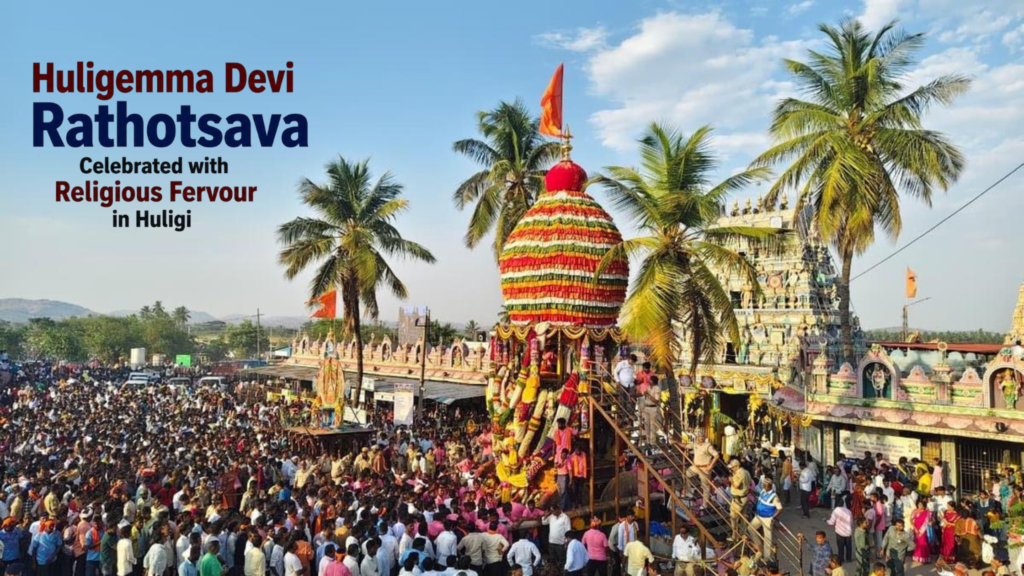
The grand Huligemma Devi Rathotsava in Huligi was celebrated with deep religious devotion, vibrant cultural traditions, and enthusiastic participation from thousands of devotees. The annual temple festival transformed the historic town into a spiritual and festive center as devotees gathered to witness the majestic chariot procession and offer prayers to Goddess Huligemma Devi.
The celebration featured traditional rituals, devotional music, temple ceremonies, and colorful processions that reflected the strong spiritual heritage of Karnataka. Devotees from nearby districts and villages visited Huligi to participate in the sacred Rathotsava and seek blessings from the presiding deity.
This year’s Huligemma Devi Rathotsava attracted significant attention because of the large public turnout, elaborate decorations, and peaceful atmosphere maintained throughout the celebrations. The event once again highlighted the importance of temple festivals in preserving local traditions, strengthening community bonds, and promoting cultural identity.
Religious leaders, local authorities, temple committees, and volunteers worked together to ensure smooth arrangements for devotees attending the festival.
Huligemma Devi Rathotsava Reflects Deep Spiritual Tradition
The Huligemma Devi Rathotsava is considered one of the most important religious events in the region and holds deep emotional and spiritual significance for devotees.
Temple festivals in Karnataka often symbolize faith, gratitude, and cultural unity. The Rathotsava tradition involves carrying the deity in a beautifully decorated wooden chariot through the streets, allowing devotees to participate in the divine procession and receive blessings.
During the celebrations in Huligi, chants, devotional songs, and religious rituals created a spiritually uplifting atmosphere throughout the town. Thousands of devotees gathered near the temple premises from early morning to witness the sacred ceremonies.
The festival also reflects centuries-old traditions that continue to remain important in rural and semi-urban communities across Karnataka.
For many families, attending the Huligemma Devi Rathotsava is not only a religious activity but also a deeply rooted cultural practice passed down through generations.
Grand Chariot Procession Draws Massive Crowd
One of the biggest highlights of the festival was the grand temple chariot procession organized with traditional rituals and community participation.
The decorated chariot carrying Goddess Huligemma Devi moved through major streets of Huligi as devotees offered prayers, flowers, coconuts, and traditional offerings along the route.
The Huligemma Devi Rathotsava procession witnessed emotional devotion as people gathered in large numbers to pull the chariot ropes, which is considered highly sacred in Hindu temple traditions.
Musical instruments, devotional singing groups, and cultural performers accompanied the procession, adding to the festive atmosphere. The streets remained filled with chants, drum beats, and spiritual celebrations throughout the event.
Temple authorities had made elaborate arrangements for crowd management, drinking water facilities, security, and medical support to ensure a safe and organized celebration.
The vibrant atmosphere during the procession reflected the deep faith and enthusiasm of devotees participating in the annual religious event.
Huligi Becomes a Spiritual and Cultural Hub
During the festival period, Huligi transformed into a major spiritual gathering point attracting devotees from multiple districts and nearby states.
The Huligemma Devi Rathotsava not only holds religious importance but also serves as a major cultural event that strengthens regional identity and traditional values.
Temporary markets, food stalls, devotional item shops, and local businesses witnessed increased activity during the festival days. Visitors explored temple surroundings while participating in prayers and celebrations.
Religious gatherings of this scale often create strong community participation and social interaction among people from different backgrounds.
Families traveling to Huligi for the festival consider it a spiritually fulfilling experience that combines devotion, tradition, and cultural celebration in a single event.
The large turnout also reflected the continued importance of temple festivals in preserving Karnataka’s religious and cultural heritage.
Importance of Temple Festivals in Karnataka
Temple festivals play an important role in Karnataka’s social and cultural landscape. Celebrations such as the Huligemma Devi Rathotsava help preserve local traditions, spiritual practices, and community unity.
These festivals often become occasions for people to reconnect with family traditions, regional customs, and devotional practices that have existed for generations.
Religious events also provide opportunities for local artists, musicians, and cultural performers to showcase traditional art forms before large audiences.
The spiritual significance of temple processions encourages collective participation and strengthens emotional connections among devotees.
Festivals also help younger generations understand the historical and cultural importance of local temples and spiritual traditions.
The continued popularity of Huligemma Devi Rathotsava demonstrates how deeply rooted religious festivals remain within Karnataka’s cultural identity.
Devotional Rituals and Traditional Ceremonies
Several traditional rituals were conducted during the festival according to temple customs and religious procedures.
Priests performed special poojas, abhishekas, and spiritual ceremonies dedicated to Goddess Huligemma Devi. Devotees offered flowers, coconuts, fruits, and prayers seeking blessings for prosperity, health, and peace.
The Huligemma Devi Rathotsava ceremonies were marked by disciplined arrangements and devotional participation throughout the day.
Traditional music and temple chants created a sacred atmosphere that enhanced the spiritual experience for devotees attending the event.
Many visitors also participated in community meals and religious gatherings organized near the temple premises.
The continuation of these rituals reflects the strong respect local communities maintain toward spiritual heritage and temple traditions.
Economic and Tourism Benefits for the Region
Large religious festivals often generate positive economic activity for local communities and businesses.
The increasing popularity of Huligemma Devi Rathotsava supports local vendors, transportation providers, food stalls, hotels, and small businesses that benefit from increased visitor movement.
Religious tourism has become an important contributor to local economies in many parts of Karnataka. Festivals attract not only devotees but also tourists interested in cultural traditions, temple architecture, and regional celebrations.
The event also creates temporary employment opportunities related to event management, security, catering, transportation, and retail activity.
Local authorities believe that well-organized religious festivals can strengthen tourism potential while preserving cultural authenticity.
The growing scale of the festival highlights Huligi’s importance as a spiritual destination within the region.
Community Participation Strengthens Festival Spirit
One of the most remarkable aspects of the Huligemma Devi Rathotsava was the active participation of local residents, volunteers, youth groups, and temple committees.
Community involvement plays a crucial role in ensuring successful organization of large religious gatherings. Volunteers assisted devotees with crowd guidance, water distribution, medical support, and festival arrangements.
Residents decorated streets and temple surroundings with lights, flowers, rangoli designs, and traditional decorations to welcome visitors.
The collective effort created a strong atmosphere of unity, cooperation, and devotion during the celebrations.
Religious festivals often help strengthen social harmony because people from different communities come together to participate respectfully in spiritual activities.
The sense of togetherness witnessed during the festival reflected the strong emotional connection local communities share with the temple and its traditions.
Cultural Significance Beyond Religion
While primarily a religious celebration, the Huligemma Devi Rathotsava also carries broader cultural significance for the region.
Temple festivals often preserve folk traditions, regional music, local crafts, and traditional performance styles that may otherwise gradually disappear.
The event provided opportunities for cultural expression and intergenerational learning, where younger audiences observed and participated in age-old traditions.
Festivals also create memories and emotional connections that strengthen local identity and historical continuity.
The celebration reflected how spirituality and culture remain closely connected in Karnataka’s traditional society.
The balance between devotion, celebration, and community participation continues to make temple festivals highly meaningful even in modern times.