







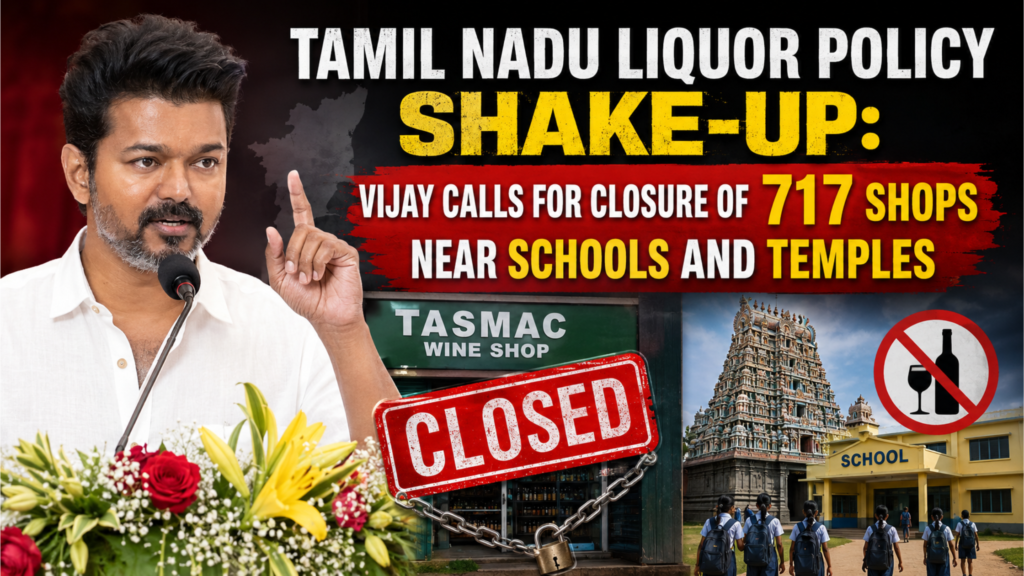
Tamil Nadu Liquor Policy Shake-Up has become one of the most discussed political and social topics in the state after actor-turned-politician Vijay called for the closure of 717 liquor shops located near schools and religious places. The announcement has sparked debate among political parties, parents, education activists, and the general public.
Vijay’s proposal focuses on public safety, student welfare, and protecting religious environments from the negative impact of alcohol sales. Many residents believe the move could improve social conditions, reduce disturbances near educational institutions, and create safer surroundings for children and families.
At the same time, critics are questioning the economic impact of shutting down these shops, especially considering the revenue generated through the Tamil Nadu State Marketing Corporation (TASMAC). The issue has now become a major topic in Tamil Nadu politics, with discussions around governance, public health, and social responsibility.
In this blog, we will explore the reasons behind this decision, its possible impact on Tamil Nadu, public reactions, political significance, and what it could mean for the future of liquor policy reforms in the state.
Understanding the Tamil Nadu Liquor Policy Shake-Up
The current Tamil Nadu Liquor Policy Shake-Up revolves around the proposal to shut down 717 TASMAC liquor outlets located close to:
- Schools
- Colleges
- Temples
- Mosques
- Churches
- Residential areas
The initiative highlights concerns about how easy access to alcohol affects students, families, and local communities.
Why Are These Shops Being Targeted?
Many citizens and activists have long argued that liquor shops near educational and religious institutions create several issues:
- Disturbance to students and teachers
- Public nuisance and safety concerns
- Increased alcohol consumption among youth
- Negative social influence near sacred places
- Traffic and law-and-order problems
Vijay’s stand appears to align with growing public demand for stricter liquor regulations in Tamil Nadu.
Vijay’s Political Strategy Behind the Move
The liquor policy announcement is also being viewed as a strategic political step by Vijay ahead of future elections.
Building a Public-Friendly Image
By supporting the closure of liquor shops near sensitive areas, Vijay is positioning himself as:
- A youth-focused leader
- A reform-oriented politician
- A supporter of women’s safety and education
- A voice for social welfare
This has helped him gain attention among:
- Parents
- Women voters
- Students
- Religious communities
- Social activists
Appealing to Tamil Nadu’s Middle-Class Families
Middle-class families in Tamil Nadu often raise concerns about alcohol addiction and its effect on households. Vijay’s proposal directly targets these concerns and strengthens his public image as someone focused on societal improvement.
Impact of Closing 717 Liquor Shops
The proposed closures could have both positive and negative consequences.
Positive Effects
1. Safer Environment for Students
Removing liquor shops near schools can reduce exposure to alcohol-related activities and create a healthier educational atmosphere.
2. Reduced Public Disturbance
Many local residents complain about:
- Noise
- Drunken behavior
- Littering
- Street fights
Closing nearby TASMAC outlets could improve public peace.
3. Better Protection Around Religious Places
Religious institutions are often crowded with families and elderly visitors. Limiting alcohol sales nearby may help preserve the sanctity of these areas.
4. Stronger Public Health Message
The move sends a clear message about responsible alcohol regulation and social awareness.
Economic Challenges of the Tamil Nadu Liquor Policy Shake-Up
While many support the initiative, there are concerns regarding revenue loss.
TASMAC Revenue Dependency
Tamil Nadu earns significant income from TASMAC-operated liquor sales. This revenue supports:
- Welfare schemes
- Infrastructure projects
- Government operations
Closing 717 shops may affect annual state income.
Possible Business Impact
Some economists argue that:
- Job losses may occur
- Illegal liquor sales could increase
- Revenue gaps may affect government spending
Balancing public welfare and economic dependency remains a key challenge in the Tamil Nadu Liquor Policy Shake-Up debate.
Public Reactions Across Tamil Nadu
The announcement has generated mixed reactions throughout the state.
Supporters Say
Many citizens believe the closures are necessary for social reform.
Supporters argue that:
- Children deserve safer surroundings
- Religious places should remain peaceful
- Alcohol addiction is harming families
- Public health must come first
Women’s organizations and parent groups have largely welcomed the proposal.
Critics Say
Opponents believe the decision may be politically motivated or difficult to implement effectively.
Some critics question:
- Whether alternative shops will simply open nearby
- How revenue losses will be managed
- Whether enforcement will be strict enough