







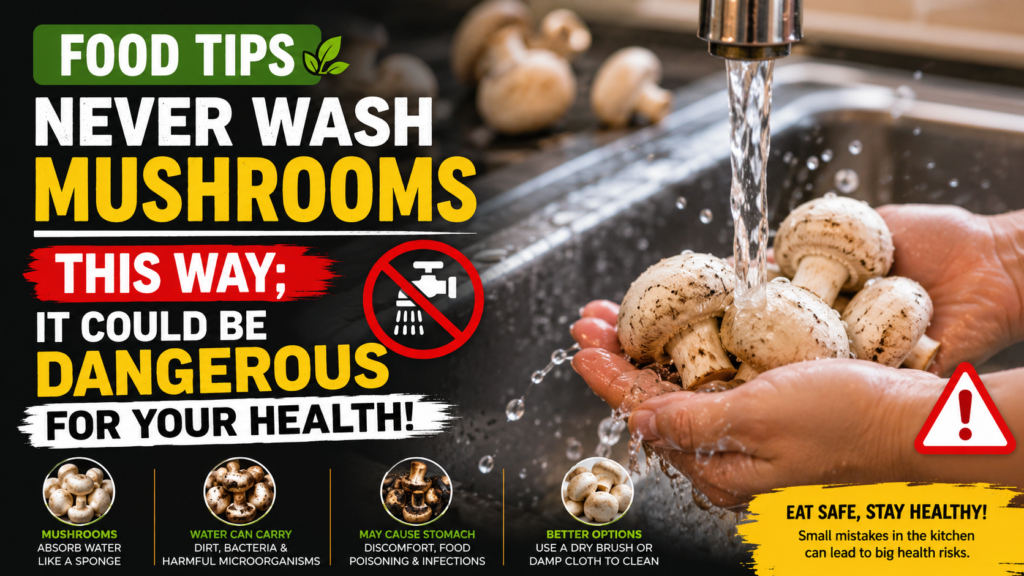
Mushrooms are one of the most popular ingredients used in soups, curries, salads, pizzas, and healthy meals, but many people unknowingly clean them the wrong way. Following proper Mushroom Cleaning Tips is important because mushrooms are highly absorbent and can quickly soak up excess water, dirt, and bacteria if handled incorrectly. One of the biggest kitchen mistakes people make is washing mushrooms under running water for too long or soaking them in a bowl of water before cooking.
This cleaning habit may not only ruin the texture and flavor of mushrooms but can also increase the risk of bacterial contamination if they are stored improperly afterward. Mushrooms act like sponges, absorbing moisture rapidly, which can make them slimy, soggy, and unsafe when left unrefrigerated. Understanding the safest and most effective way to clean mushrooms can help protect your health while improving the quality of your meals.
Experts recommend simple and safe cleaning methods that preserve freshness, maintain nutrition, and reduce food safety risks. By following the right techniques, you can enjoy mushrooms safely while avoiding common kitchen hygiene mistakes.
Why Proper Mushroom Cleaning Matters
Many people assume that washing vegetables and mushrooms aggressively makes them cleaner, but mushrooms require special handling. Good Mushroom Cleaning Tips focus on removing dirt gently without allowing the mushrooms to absorb excess water.
Mushrooms naturally contain a high percentage of water, which means they easily become soft and mushy when soaked. Excess moisture can also create the perfect environment for bacteria growth, especially when mushrooms are stored for several hours after washing. This is why professional chefs and food safety experts often advise against rinsing mushrooms under heavy water pressure or leaving them submerged in water.
Improperly cleaned mushrooms may lose their taste, texture, and nutritional quality. In some cases, moisture trapped inside mushrooms can even shorten their shelf life and increase spoilage risks. Proper cleaning helps maintain freshness while reducing the chance of contamination.
Mushroom Cleaning Tips for Safe and Healthy Cooking
The safest method recommended by food experts is to use a dry paper towel, soft brush, or slightly damp cloth to remove dirt from mushrooms. These simple Mushroom Cleaning Tips help preserve texture and prevent excess water absorption.
If mushrooms appear extremely dirty, a quick rinse under cold water is acceptable, but they should immediately be dried using a clean kitchen towel or tissue paper. Allowing mushrooms to remain wet for long periods can make them slimy and unpleasant to cook.
Fresh mushrooms should also be stored properly after cleaning. Refrigeration in a breathable paper bag is usually the best option because it helps maintain airflow while reducing moisture buildup. Plastic bags can trap humidity, causing mushrooms to spoil faster.
Food hygiene experts also recommend avoiding pre-washing mushrooms if they will not be used immediately. Cleaning them right before cooking is considered the safest and most effective approach.
Common Mushroom Washing Mistakes to Avoid
One of the most common kitchen mistakes is soaking mushrooms in a bowl of water for several minutes. This practice allows mushrooms to absorb too much moisture, affecting both taste and food safety. Another mistake is washing mushrooms too early before storage, which often causes rapid spoilage inside refrigerators.
Some people also use soap or vegetable cleaning liquids on mushrooms, which is unnecessary and unsafe. Mushrooms should only be cleaned using water in limited amounts or dry-cleaning techniques. Following proper Mushroom Cleaning Tips ensures that mushrooms remain flavourful, fresh, and safe for consumption.
Poor kitchen hygiene can also increase contamination risks. Using dirty cloths or unclean cutting boards while preparing mushrooms may spread harmful bacteria. Maintaining a clean cooking environment is equally important for food safety.
Health Risks Linked to Improper Mushroom Cleaning
Improper mushroom cleaning may contribute to bacterial growth, digestive discomfort, and faster spoilage. Wet mushrooms stored incorrectly can develop unpleasant odors and slimy surfaces, indicating contamination or decay.
Food experts explain that excess moisture encourages microbial growth, especially when mushrooms are left at room temperature for extended periods. Following correct Mushroom Cleaning Tips reduces these risks and helps maintain food quality.
In addition to food safety concerns, overwashed mushrooms often lose their natural earthy flavor and firm texture. This can negatively affect recipes and overall dining experience. Proper cleaning methods help retain nutrients while supporting healthier cooking practices.