
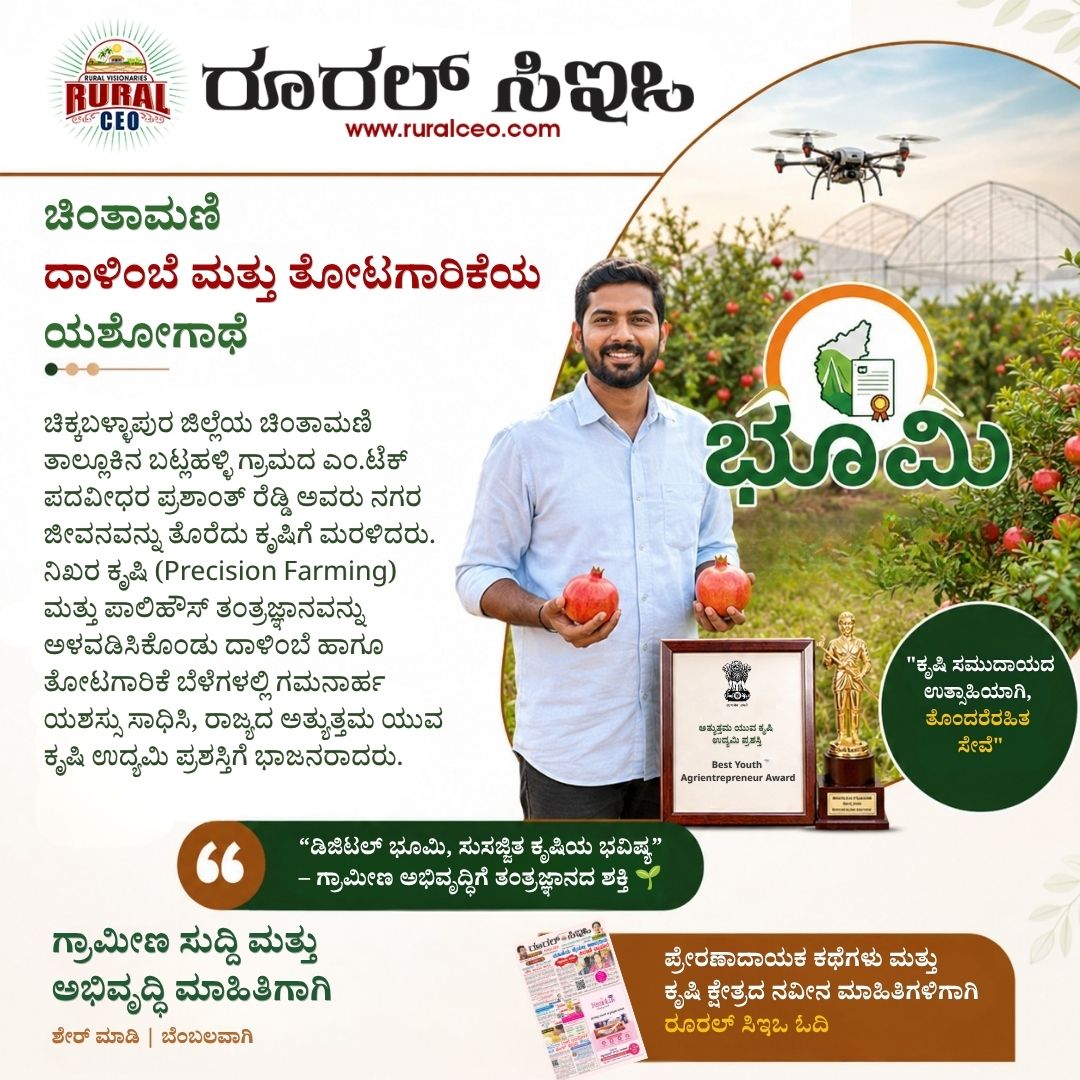


Chintamani Pomegranate Farming has emerged as one of Karnataka’s most inspiring agricultural success stories. In an era when many young professionals migrate toward urban careers, M.Tech graduate Prashanth Reddy from Batlahalli village in Chintamani Taluk, Chikkaballapur district, chose a different path. He left city life behind and returned to his roots, embracing modern agriculture and transforming traditional farming into a profitable enterprise.
By adopting precision farming techniques and advanced polyhouse technology, Prashanth Reddy significantly improved the productivity of pomegranate and horticulture crops. His innovative approach not only increased farm income but also demonstrated how technology-driven agriculture can create sustainable opportunities in rural India. His achievements earned him the prestigious Best Youth Agrientrepreneur Award, making him a role model for aspiring farmers and agricultural entrepreneurs across Karnataka.
The Journey from Engineer to Agripreneur
Prashanth Reddy’s story stands out because of his educational background and willingness to take calculated risks. After completing his M.Tech degree, he had opportunities to pursue a conventional urban career. However, he recognized the untapped potential of modern farming and decided to invest his knowledge and skills in agriculture.
His vision was simple yet ambitious:
- Introduce scientific farming methods.
- Improve crop productivity.
- Reduce resource wastage.
- Generate sustainable profits.
- Create a model farm for future generations.
This decision marked the beginning of a transformative agricultural journey.
How Chintamani Pomegranate Farming Became a Success
The success of Chintamani Pomegranate Farming can largely be attributed to the adoption of advanced agricultural technologies. Instead of relying solely on conventional farming practices, Prashanth implemented modern cultivation methods that improved both efficiency and profitability.
Key Technologies Used
1. Precision Farming
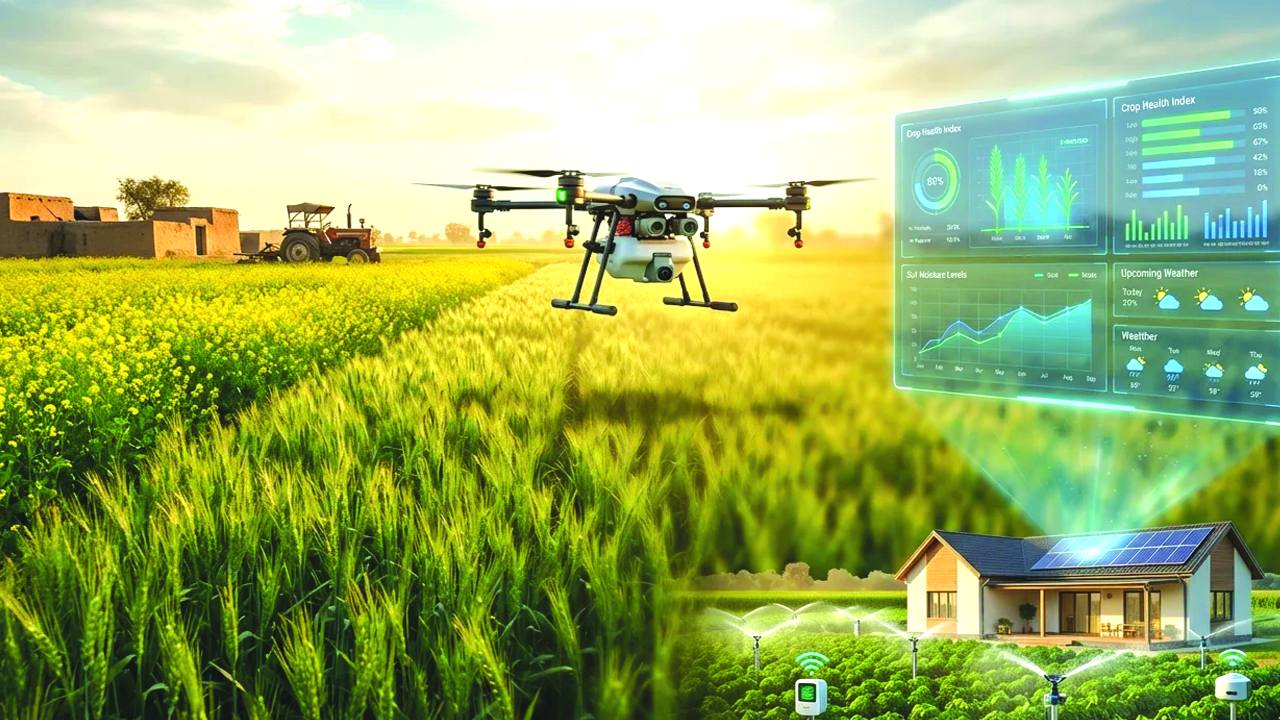
Precision farming involves the use of data, monitoring systems, and scientific techniques to optimize crop growth.
Benefits include:
- Efficient water management
- Better nutrient utilization
- Reduced input costs
- Improved crop quality
- Higher yields
2. Polyhouse Technology
Polyhouses create a controlled environment that protects crops from adverse weather conditions.
Advantages include:
- Year-round cultivation
- Protection from pests and diseases
- Enhanced crop quality
- Better market value
- Increased productivity
3. Scientific Irrigation Management
Modern irrigation techniques helped conserve water while ensuring that crops received the required moisture levels at the right time.
Impact on Pomegranate and Horticulture Production
The implementation of scientific farming practices led to remarkable improvements in farm performance.
Major Achievements
- Increased pomegranate yield and quality.
- Better disease management.
- Efficient utilization of water resources.
- Higher market demand for produce.
- Improved profitability and farm sustainability.
Through Chintamani Pomegranate Farming, Prashanth demonstrated that technology can significantly improve agricultural outcomes while reducing operational risks.
Recognition and Awards
The success achieved through innovative farming methods did not go unnoticed.
Prashanth Reddy received the prestigious:
Best Youth Agrientrepreneur Award
This award recognized:
- Innovation in agriculture
- Adoption of modern farming practices
- Contribution to rural development
- Excellence in horticulture production
His achievements have also been highlighted in studies documenting successful agripreneurs in Karnataka, further establishing his reputation as a leader in agricultural innovation.
Lessons for Young Farmers
The story offers valuable insights for aspiring farmers and agricultural entrepreneurs.
Key Takeaways
- Education and agriculture can work together successfully.
- Technology adoption improves productivity.
- Precision farming reduces wastage and increases profits.
- Horticulture offers significant income opportunities.
- Rural entrepreneurship can create sustainable livelihoods.
Many young farmers can draw inspiration from Chintamani Pomegranate Farming and explore modern agricultural techniques to enhance their own farming operations.
The Future of Modern Agriculture in Karnataka
Karnataka has emerged as a leader in agricultural innovation, with increasing adoption of:
- Precision farming
- Polyhouse cultivation
- Drip irrigation
- Digital agriculture
- Smart farm management systems
The success of Chintamani Pomegranate Farming serves as a blueprint for future agricultural development in the state.
Government agencies, agricultural universities, and research institutions continue to encourage farmers to adopt scientific practices that improve productivity and sustainability.
Why Precision Farming Matters
Modern agriculture faces several challenges:
- Climate change
- Water scarcity
- Rising input costs
- Labor shortages
- Market competition
Precision farming helps address these challenges by enabling farmers to make data-driven decisions.
Benefits include:
- Improved crop health
- Better resource management
- Higher returns on investment
- Reduced environmental impact
- Long-term sustainability
This is precisely why Chintamani Pomegranate Farming has become a widely recognized example of successful agricultural innovation.