






For centuries, a farmer’s best tools were experience and intuition – knowing when clouds
darkened enough to sow, or sensing when livestock looked off-colour. Today, in pockets of
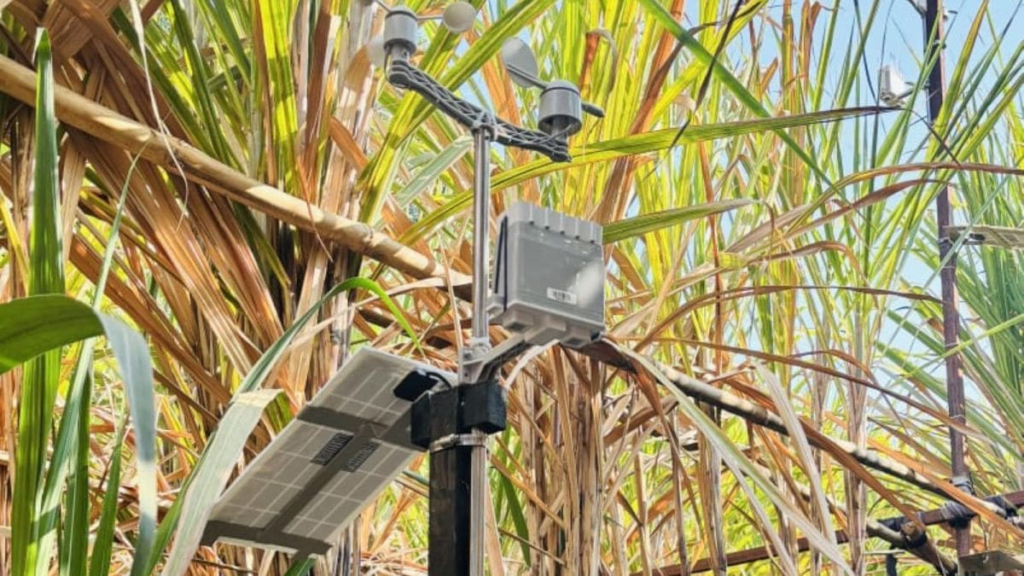
Maharashtra, sensors are doing some of that watching. Artificial intelligence is entering Indian
agriculture gradually, through collars on cattle and cameras over sugarcane fields.
What AI is doing on the farm
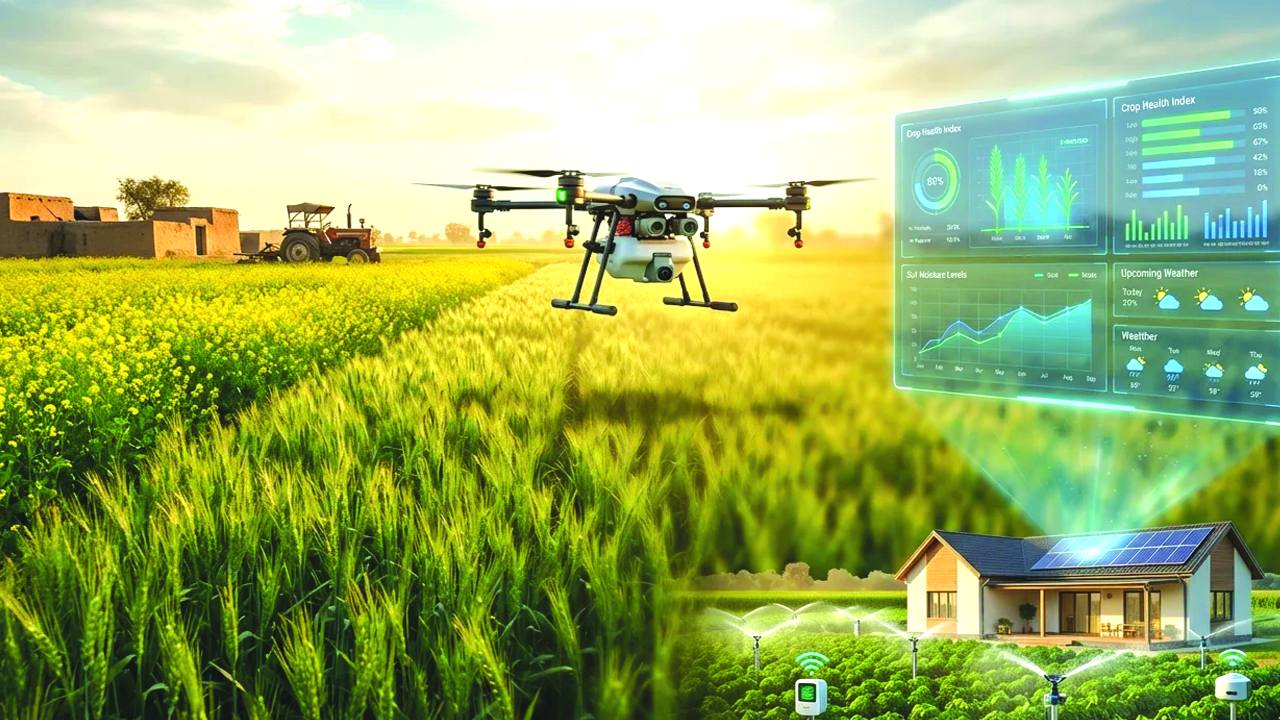
The uses are more varied. At the soil level, AI tools analyse satellite imagery to detect nutrient
deficiencies. At the crop level, AI combined with drone surveillance enables early detection of
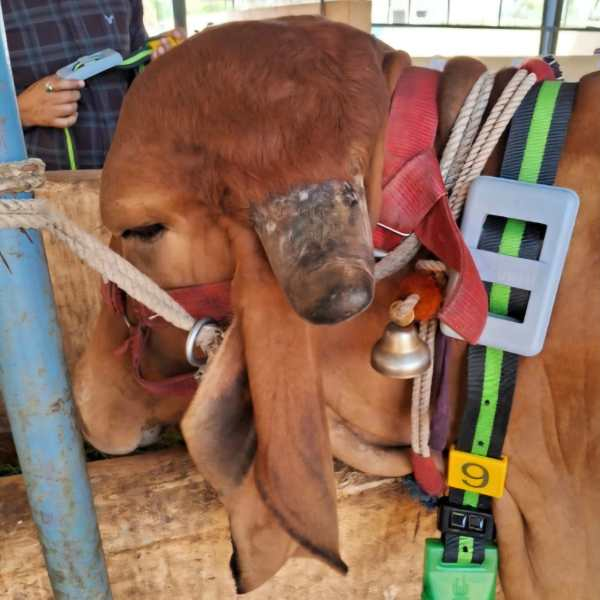
pests and disease. For livestock, smart collars monitor animal health and breeding cycles in real
time. AI-enabled agricultural networks have already improved market access, price discovery,
and logistical efficiency for about 1.8 million farmers across 12 states.
In Maharashtra, a collaboration between Agriculture Development Trust (ADT) Baramati,
Microsoft, and Oxford University has used AI-enabled crop management to improve sugarcane
yields by 25 to 30 per cent. Work is now underway to extend similar interventions to vegetables
such as tomato and brinjal, with algorithms being developed to bring tailored advisories to
individual farmers.
“What we are doing in sugarcane – soil health management, soil moisture, soil nutrients, crop
health, crop nutrition, and crop protection – similar things will be done for vegetables,” said Dr
Bharat Kakade, President and Managing Trustee, BAIF Development Research Foundation,
Pune.
Another area generating interest is weed management. Currently, farmers either pull weeds
manually, which is labour-intensive and expensive, or spray herbicides that carry risks to human
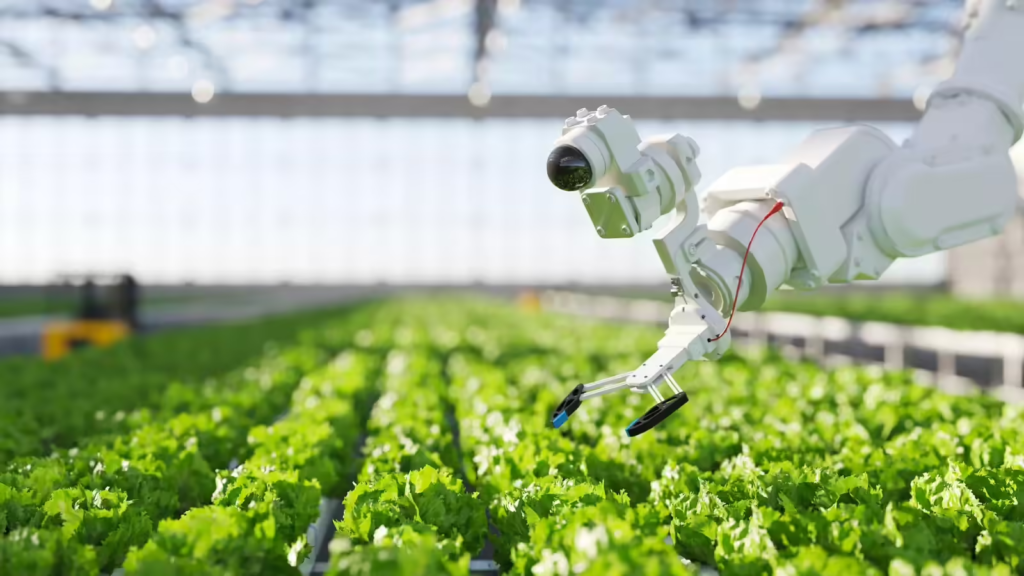
and animal health. AI-powered robotics offer a third path: machines that move through fields and
remove weeds without chemicals. The technology is in an early stage, but Kakade sees it as one
of the more promising frontiers. “AI-enabled robots can be sent into farms to do weeding, as an
alternative to herbicides, which have hazardous effects on human health,” he noted.
Government schemes
The Digital Agriculture Mission, launched in 2024 with a total outlay of Rs 2,817 crore, aims to
advance farmer-centric digital solutions by leveraging verified datasets on farmers, landholdings,
and crops, alongside AI and remote sensing technologies.
At its core is AgriStack, a digital identity system linking each farmer to their land records,
livestock, and government benefits. Over 7.63 crore Farmer IDs have been generated as of
November last year, including 1.93 crore for women farmers, against a target of 11 crore by
2026-27.
For centuries, a farmer’s best tools were experience and intuition – knowing when clouds
darkened enough to sow, or sensing when livestock looked off-colour. Today, in pockets of
Maharashtra, sensors are doing some of that watching. Artificial intelligence is entering Indian
agriculture gradually, through collars on cattle and cameras over sugarcane fields.
What AI is doing on the farm
The uses are more varied. At the soil level, AI tools analyse satellite imagery to detect nutrient
deficiencies. At the crop level, AI combined with drone surveillance enables early detection of
pests and disease. For livestock, smart collars monitor animal health and breeding cycles in real
time. AI-enabled agricultural networks have already improved market access, price discovery,
and logistical efficiency for about 1.8 million farmers across 12 states.
In Maharashtra, a collaboration between Agriculture Development Trust (ADT) Baramati,
Microsoft, and Oxford University has used AI-enabled crop management to improve sugarcane
yields by 25 to 30 per cent. Work is now underway to extend similar interventions to vegetables
such as tomato and brinjal, with algorithms being developed to bring tailored advisories to
individual farmers.
“What we are doing in sugarcane – soil health management, soil moisture, soil nutrients, crop
health, crop nutrition, and crop protection – similar things will be done for vegetables,” said Dr
Bharat Kakade, President and Managing Trustee, BAIF Development Research Foundation,
Pune.
Another area generating interest is weed management. Currently, farmers either pull weeds
manually, which is labour-intensive and expensive, or spray herbicides that carry risks to human
and animal health. AI-powered robotics offer a third path: machines that move through fields and
remove weeds without chemicals. The technology is in an early stage, but Kakade sees it as one
of the more promising frontiers. “AI-enabled robots can be sent into farms to do weeding, as an
alternative to herbicides, which have hazardous effects on human health,” he noted.
Government schemes
The Digital Agriculture Mission, launched in 2024 with a total outlay of Rs 2,817 crore, aims to
advance farmer-centric digital solutions by leveraging verified datasets on farmers, landholdings,
and crops, alongside AI and remote sensing technologies.
At its core is AgriStack, a digital identity system linking each farmer to their land records,
livestock, and government benefits. Over 7.63 crore Farmer IDs have been generated as of
November last year, including 1.93 crore for women farmers, against a target of 11 crore by
2026-27.
Looking ahead, the Union Budget 2026-27 has proposed Bharat-VISTAAR (Virtually Integrated
System to Access Agricultural Resources), a multilingual AI tool that aims to integrate
AgriStack portals and Indian Council of Agricultural Research (ICAR) data to provide
customised, voice-first, AI-driven advisory support to farmers to enhance productivity.
Early tools
Two national tools stand out for their reach. Kisan e-Mitra, an AI-powered chatbot operating in
11 regional languages, handles over 8,000 farmer queries daily, covering schemes such as PM
Kisan, Kisan Credit Card, and crop insurance. The National Pest Surveillance System (NPSS),
launched in 2024, allows farmers to upload images of affected crops for rapid AI-powered
diagnosis.
For sowing decisions, an AI-based pilot for local monsoon onset forecasting during Kharif 2025
reached 3.88 crore farmers across 13 states via SMS, with 31 to 52 per cent of surveyed farmers
adjusting their sowing decisions based on these forecasts.
Protecting what farmers grow
Crop losses have long been financially devastating for small farmers. AI is now making
insurance faster and more transparent. YES-TECH (Yield Estimation System based on
Technology) uses remote sensing and AI-driven analytics for yield estimation and has been
adopted by nine states, with Madhya Pradesh fully transitioning to technology-based yield
assessment.
CROPIC (Collection of Real-Time Observations & Photo of Crops) allows farmers to upload
geotagged, time-stamped crop images to support transparent, real-time damage assessment under
the Pradhan Mantri Fasal Bima Yojana.
Challenges
Despite the momentum, the technology is far from ready to operate independently. Kakade noted
that with datasets still being built in many areas, AI recommendations cannot yet be fully trusted
without human verification alongside them. “Unless you have sufficient data collected, gathered,
analysed, and until accuracy reaches a certain level, you can’t rely on solutions. As data
increases, accuracy and reliability improve,” he said.
In a sector where a wrong advisory can mean a lost harvest, AI outputs at this stage must be read
alongside the judgment of trained field workers and extension officers.
The government’s own AI Playbook for Agriculture, developed with the World Economic
Forum, acknowledges that fragmented data ecosystems, limited digital infrastructure,
affordability barriers, and last-mile delivery challenges remain critical constraints to scaling AI
from pilots to widespread adoption. For centuries, a farmer’s best tools were experience and intuition – knowing when clouds
darkened enough to sow, or sensing when livestock looked off-colour. Today, in pockets of
Maharashtra, sensors are doing some of that watching. Artificial intelligence is entering Indian
agriculture gradually, through collars on cattle and cameras over sugarcane fields.
What AI is doing on the farm
The uses are more varied. At the soil level, AI tools analyse satellite imagery to detect nutrient
deficiencies. At the crop level, AI combined with drone surveillance enables early detection of
pests and disease. For livestock, smart collars monitor animal health and breeding cycles in real
time. AI-enabled agricultural networks have already improved market access, price discovery,
and logistical efficiency for about 1.8 million farmers across 12 states.
In Maharashtra, a collaboration between Agriculture Development Trust (ADT) Baramati,
Microsoft, and Oxford University has used AI-enabled crop management to improve sugarcane
yields by 25 to 30 per cent. Work is now underway to extend similar interventions to vegetables
such as tomato and brinjal, with algorithms being developed to bring tailored advisories to
individual farmers.
“What we are doing in sugarcane – soil health management, soil moisture, soil nutrients, crop
health, crop nutrition, and crop protection – similar things will be done for vegetables,” said Dr
Bharat Kakade, President and Managing Trustee, BAIF Development Research Foundation,
Pune.
Another area generating interest is weed management. Currently, farmers either pull weeds
manually, which is labour-intensive and expensive, or spray herbicides that carry risks to human
and animal health. AI-powered robotics offer a third path: machines that move through fields and
remove weeds without chemicals. The technology is in an early stage, but Kakade sees it as one
of the more promising frontiers. “AI-enabled robots can be sent into farms to do weeding, as an
alternative to herbicides, which have hazardous effects on human health,” he noted.
Government schemes
The Digital Agriculture Mission, launched in 2024 with a total outlay of Rs 2,817 crore, aims to
advance farmer-centric digital solutions by leveraging verified datasets on farmers, landholdings,
and crops, alongside AI and remote sensing technologies.
At its core is AgriStack, a digital identity system linking each farmer to their land records,
livestock, and government benefits. Over 7.63 crore Farmer IDs have been generated as of
November last year, including 1.93 crore for women farmers, against a target of 11 crore by
2026-27.
Looking ahead, the Union Budget 2026-27 has proposed Bharat-VISTAAR (Virtually Integrated
System to Access Agricultural Resources), a multilingual AI tool that aims to integrate
AgriStack portals and Indian Council of Agricultural Research (ICAR) data to provide
customised, voice-first, AI-driven advisory support to farmers to enhance productivity.
Early tools
Two national tools stand out for their reach. Kisan e-Mitra, an AI-powered chatbot operating in
11 regional languages, handles over 8,000 farmer queries daily, covering schemes such as PM
Kisan, Kisan Credit Card, and crop insurance. The National Pest Surveillance System (NPSS),
launched in 2024, allows farmers to upload images of affected crops for rapid AI-powered
diagnosis.
For sowing decisions, an AI-based pilot for local monsoon onset forecasting during Kharif 2025
reached 3.88 crore farmers across 13 states via SMS, with 31 to 52 per cent of surveyed farmers
adjusting their sowing decisions based on these forecasts.
Protecting what farmers grow
Crop losses have long been financially devastating for small farmers. AI is now making
insurance faster and more transparent. YES-TECH (Yield Estimation System based on
Technology) uses remote sensing and AI-driven analytics for yield estimation and has been
adopted by nine states, with Madhya Pradesh fully transitioning to technology-based yield
assessment.
CROPIC (Collection of Real-Time Observations & Photo of Crops) allows farmers to upload
geotagged, time-stamped crop images to support transparent, real-time damage assessment under
the Pradhan Mantri Fasal Bima Yojana.
Challenges
Despite the momentum, the technology is far from ready to operate independently. Kakade noted
that with datasets still being built in many areas, AI recommendations cannot yet be fully trusted
without human verification alongside them. “Unless you have sufficient data collected, gathered,
analysed, and until accuracy reaches a certain level, you can’t rely on solutions. As data
increases, accuracy and reliability improve,” he said.
In a sector where a wrong advisory can mean a lost harvest, AI outputs at this stage must be read
alongside the judgment of trained field workers and extension officers.
The government’s own AI Playbook for Agriculture, developed with the World Economic
Forum, acknowledges that fragmented data ecosystems, limited digital infrastructure,
affordability barriers, and last-mile delivery challenges remain critical constraints to scaling AI
from pilots to widespread adoption.
“Skilled manpower at the intersection of agriculture and AI is also limited, and funding support
in the early stages remains necessary before solutions reach viability,” added Kakade.
(SOURCE : THE ECONOMIC TIMES )