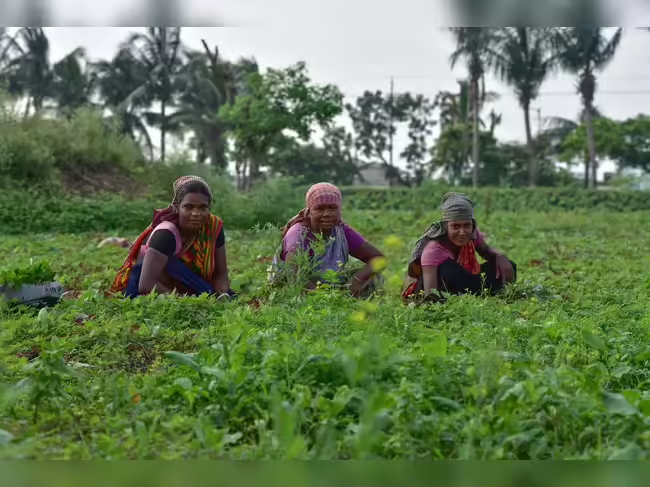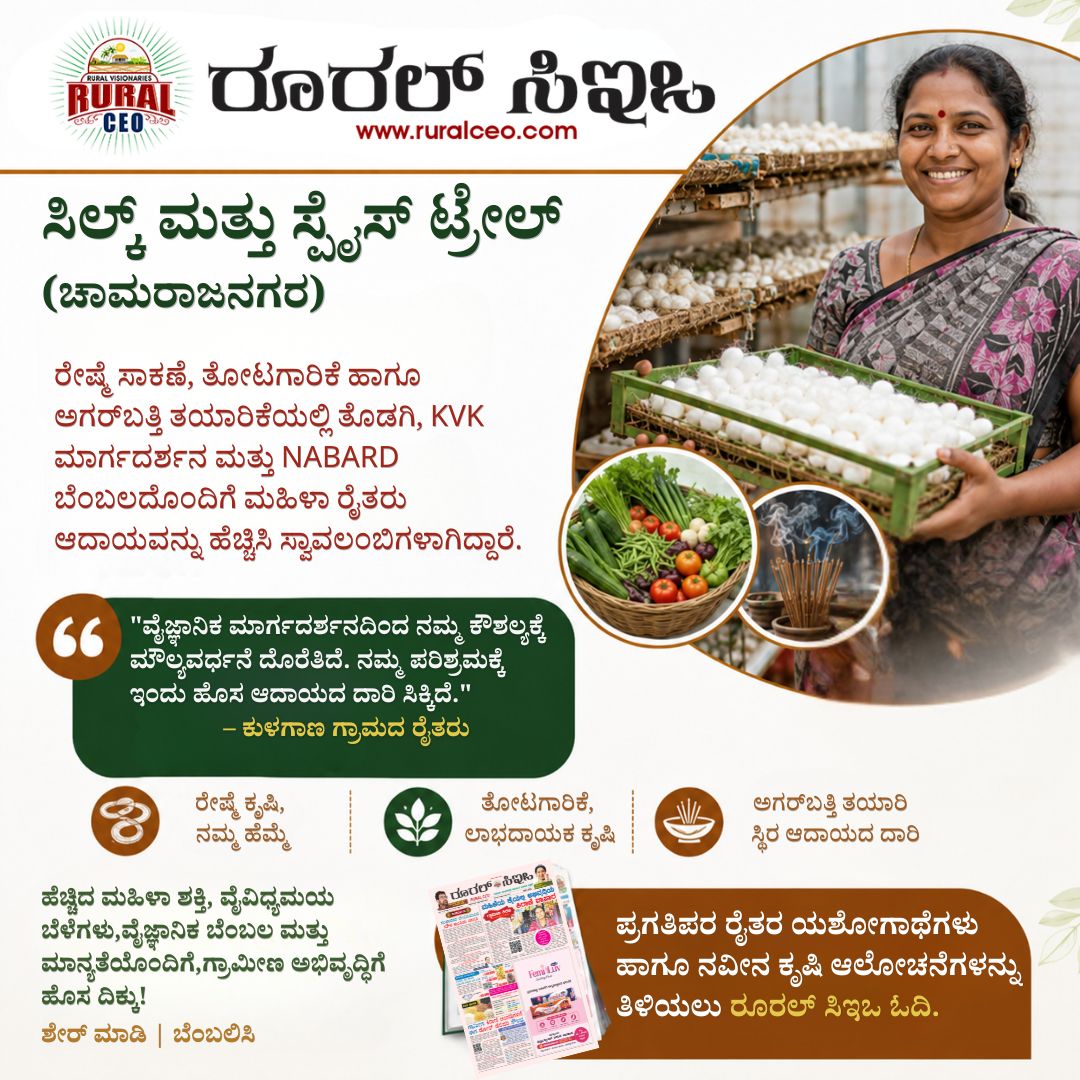

Women Farmers in Chamarajanagar are redefining rural development through innovation, diversification, and entrepreneurship. In Kulagana village, a remarkable transformation is taking place as women have moved beyond traditional cereal cultivation and embraced sericulture, horticulture, and incense stick manufacturing. Supported by scientific guidance from Krishi Vigyan Kendra (KVK) and recognition from NABARD, these women-led enterprises have created sustainable income opportunities and improved household livelihoods.
The success story of Women Farmers in Chamarajanagar demonstrates how rural communities can achieve economic growth by adopting diversified agricultural practices. Through determination, skill development, and institutional support, these women have built resilient businesses that contribute to both family welfare and local economic development. Their journey highlights the power of agricultural innovation and serves as an inspiring model for rural entrepreneurship across Karnataka and India.
The Rise of Rural Women Entrepreneurship
Agriculture has traditionally been the backbone of rural livelihoods in Karnataka. However, changing market conditions and climate challenges have encouraged farmers to explore alternative income-generating opportunities. In Kulagana village, women recognized the need to diversify their activities and reduce dependence on conventional crops.
The emergence of women-led micro-enterprises has created new avenues for financial independence and social empowerment. By engaging in sericulture, vegetable cultivation, and value-added agricultural activities, rural women have strengthened their economic position while contributing significantly to their communities.
The success of Women Farmers in Chamarajanagar reflects a broader trend where women are becoming key drivers of agricultural innovation and rural development. Their efforts demonstrate that sustainable growth is possible when local knowledge is combined with scientific expertise and market-oriented approaches.
Women Farmers in Chamarajanagar: A Model of Diversification
The journey of Women Farmers in Chamarajanagar began with the realization that diversified farming systems could provide greater income stability. Instead of relying solely on cereal crops, they expanded into multiple enterprises that complemented one another and created year-round earning opportunities.
Sericulture emerged as a particularly promising venture. The cultivation of mulberry and rearing of silkworms provided women with a steady source of income while utilizing locally available resources. The silk industry also opened access to broader markets and value chains, increasing profitability.
Horticulture became another important component of the diversification strategy. The cultivation of vegetables enabled families to improve nutrition while generating additional revenue through local market sales. This combination of agriculture and entrepreneurship created a balanced approach to rural livelihood development.
Alongside farming activities, women also ventured into incense stick manufacturing. This enterprise provided supplementary income and allowed them to utilize available labor efficiently throughout the year. The integration of multiple income streams significantly enhanced financial resilience.
The Role of KVK and NABARD in Rural Transformation
The success achieved by these women would not have been possible without institutional support. Krishi Vigyan Kendra played a crucial role by providing scientific training, technical guidance, and practical demonstrations. Through capacity-building initiatives, women gained access to modern agricultural practices and enterprise management skills.
NABARD further strengthened these efforts by recognizing and supporting community-based enterprises. The organization’s focus on rural development and financial inclusion enabled women to access resources, improve productivity, and expand their business activities.
This partnership between local communities and development institutions demonstrates how collaborative efforts can create meaningful and lasting impact. The experience of Women Farmers in Chamarajanagar shows that access to knowledge and support systems is essential for sustainable rural growth.
Economic and Social Impact on Rural Communities
The transformation has generated significant benefits for participating households. Increased income has improved living standards, enabled better access to education, and strengthened household financial security. Women now contribute more actively to family decision-making and community leadership.
Economic empowerment has also enhanced confidence and self-reliance among rural women. As successful entrepreneurs, they have become role models for younger generations and inspired other women to explore new opportunities.
The achievements of Women Farmers in Chamarajanagar extend beyond individual households. Their enterprises create local employment opportunities, stimulate economic activity, and contribute to the overall development of the village economy.
Sustainable Agriculture and Future Opportunities
Sustainability remains a central aspect of this success story. By integrating diverse agricultural and non-agricultural activities, women have created resilient livelihood systems capable of adapting to market fluctuations and environmental challenges.
The growing demand for silk products, fresh vegetables, and locally manufactured goods presents significant opportunities for future expansion. Continued investment in training, market linkages, and value addition can further enhance income generation and long-term sustainability.
The experience of Women Farmers in Chamarajanagar illustrates how rural communities can build prosperous futures through innovation, collaboration, and entrepreneurship. Their journey serves as an example for villages seeking inclusive and sustainable development pathways.