





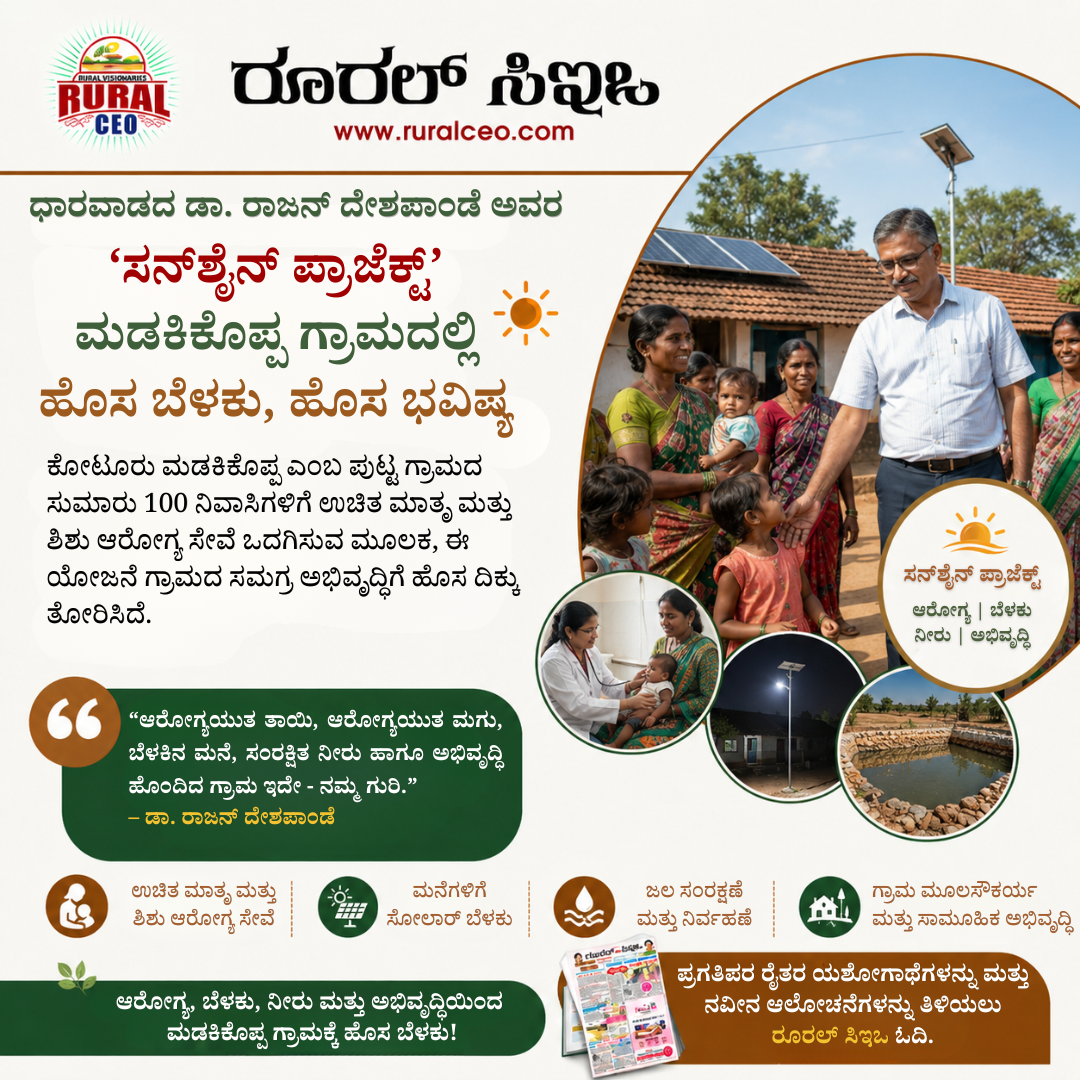
The Sunshine Project is emerging as a powerful model of rural transformation in Karnataka, demonstrating how integrated community development can improve lives at the grassroots level. Led by Dr. Rajan Deshpande, this initiative is bringing healthcare, solar energy, water conservation, and infrastructure development together under a single vision. In the small hamlet of Madakikoppa near Dharwad, the project has already made a meaningful impact on nearly 100 residents by addressing some of the most critical challenges faced by rural communities.
What makes the Sunshine Project unique is its holistic approach. Rather than focusing on a single area of development, it combines multiple interventions that directly improve the quality of life. From free maternal and child healthcare services to solar-powered lighting and water conservation initiatives, the project demonstrates how sustainable rural development can be achieved through thoughtful planning and community participation. As rural India searches for scalable and impactful development models, the Sunshine Project offers a compelling example of what is possible.
A Vision Beyond Traditional Rural Development
Rural development often focuses on isolated challenges such as healthcare, education, or infrastructure. While these initiatives are important, long-term transformation requires a broader approach. The Sunshine Project recognizes that health, energy, water, and infrastructure are interconnected and must be addressed together.
In Madakikoppa, residents faced several challenges common to many villages across India. Limited healthcare access, inadequate infrastructure, water-related concerns, and unreliable energy sources affected daily life. Through targeted interventions, the project has helped create a more supportive environment for families while laying the foundation for sustainable progress.
This integrated development model has improved living standards while strengthening community resilience. Villagers now have access to better services that support both immediate needs and future growth.
How the Sunshine Project is Improving Healthcare
Healthcare is one of the most important pillars of community development. Rural women and children often face barriers to accessing quality medical care, leading to preventable health problems and complications.
The Sunshine Project addresses this issue by providing free maternal and child healthcare services to residents. Regular health checkups, preventive care programs, and maternal support services ensure that women receive the medical attention they need during pregnancy and childbirth.
Children also benefit from improved healthcare access, which contributes to healthier growth and development. By prioritizing maternal and child health, the project is helping families build a stronger and healthier future.
Improved healthcare outcomes create long-term benefits for entire communities. Healthier families are more productive, better able to participate in economic activities, and more likely to invest in education and community development.
Solar Energy Bringing Light to Rural Communities
Access to reliable electricity remains a challenge in many rural regions. Without adequate lighting, educational opportunities, household productivity, and community activities can be limited.
The Sunshine Project has introduced solar-powered lighting systems that provide clean and sustainable energy solutions. These solar lights improve safety, reduce dependence on traditional energy sources, and create opportunities for productive evening activities.
Students can study after sunset, households can function more efficiently, and community spaces become more accessible. Renewable energy solutions also support environmental sustainability by reducing carbon emissions and lowering long-term energy costs.
The successful implementation of solar lighting demonstrates how renewable energy can become an important tool for rural transformation.
Water Conservation for a Sustainable Future
Water security remains one of the most significant concerns for rural communities. Changing climate patterns and irregular rainfall often affect water availability for households and agriculture.
Recognizing this challenge, the Sunshine Project includes water conservation as a core component of its development strategy. The initiative promotes efficient water management practices that help communities preserve valuable resources and improve long-term sustainability.
Better water conservation benefits households, farming activities, and livestock management. It also helps villages become more resilient during periods of drought and water scarcity.
By focusing on sustainable resource management, the project is helping communities secure a stronger future while protecting local ecosystems.
Infrastructure Development Supporting Growth
Strong infrastructure is essential for economic and social progress. Roads, public facilities, sanitation systems, and community spaces all contribute to improved living conditions and development opportunities.
The Sunshine Project has supported infrastructure improvements that directly benefit local residents. Better infrastructure enhances accessibility, improves service delivery, and creates a more comfortable environment for families.
Infrastructure development also encourages economic activity and community participation. As public facilities improve, residents gain better access to healthcare, education, and social services.
These improvements create lasting benefits that continue to support development long after individual projects are completed.
Why the Sunshine Project Matters
The success of the Sunshine Project highlights the importance of comprehensive development strategies. Instead of addressing one challenge at a time, the project demonstrates how integrated solutions can create meaningful and sustainable change.
Key outcomes include:
- Improved maternal and child healthcare.
- Access to solar-powered lighting.
- Enhanced water conservation practices.
- Better village infrastructure.
- Increased community participation.
These achievements show that rural development can be more effective when multiple needs are addressed simultaneously.
A Replicable Model for Rural India
The lessons learned from Madakikoppa have relevance far beyond a single village. Communities across India face similar challenges and can benefit from integrated development models that combine healthcare, renewable energy, water management, and infrastructure improvement.
The Sunshine Project demonstrates that meaningful transformation does not always require massive investments. Strategic planning, community involvement, and a long-term vision can produce remarkable results.
As policymakers and development organizations seek effective rural solutions, this initiative offers valuable insights into building sustainable and inclusive communities.