









Recurring droughts and water shortages are forcing farmers across Karnataka to rethink traditional farming methods. In response, many rural communities are now shifting toward millets as a sustainable and climate-resilient crop option. Sustainable Millet Farming in Karnataka is emerging as a practical solution for farmers struggling with declining rainfall, poor soil health, and rising agricultural costs. Millets require less water, grow well in dry conditions, and provide strong nutritional and economic benefits, making them an ideal crop for drought-prone regions.
Farmers in districts such as Chitradurga, Ballari, Koppal, Vijayapura, and parts of North Karnataka are increasingly cultivating millets like ragi, jowar, bajra, and foxtail millet. These traditional grains are helping revive degraded farmlands while reducing dependence on water-intensive crops. The growing interest in millet cultivation is not only supporting sustainable agriculture but also improving food security and rural livelihoods. As climate change continues to impact farming communities, Sustainable Millet Farming in Karnataka is becoming an important pathway toward long-term agricultural resilience.
Why Farmers in Karnataka Are Choosing Millets
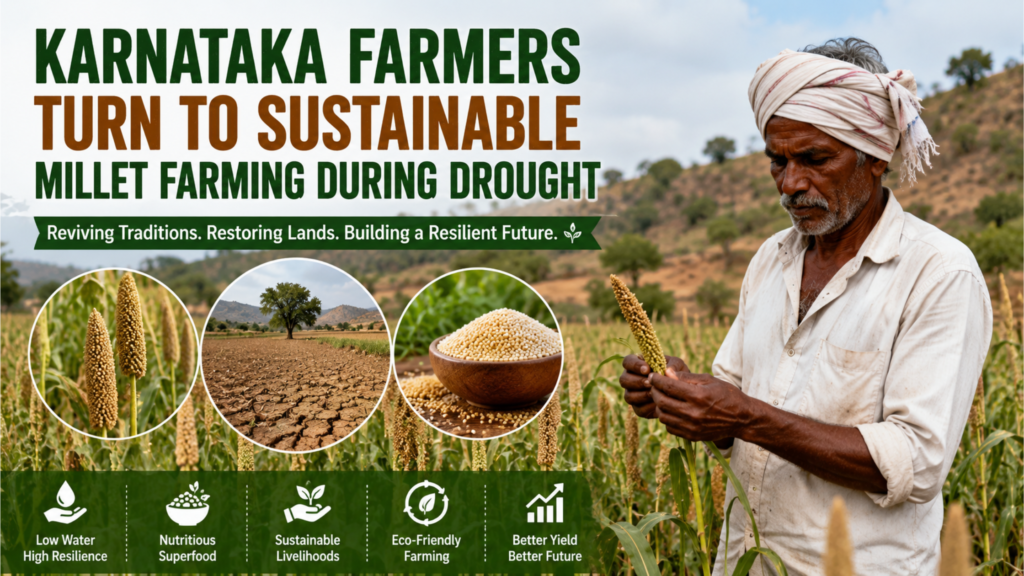
Farmers are choosing millet cultivation because these crops can survive harsh weather conditions and require significantly less water compared to crops like sugarcane and paddy. Karnataka has faced repeated drought conditions over the last few years, making water conservation a major concern for agricultural communities. Millets offer a reliable alternative because they can grow in dry soil and unpredictable rainfall patterns.
Traditional millet crops were once widely cultivated across Karnataka before commercial farming shifted toward water-intensive agriculture. Today, farmers are rediscovering the environmental and economic value of these grains. Millets also mature faster, reduce cultivation costs, and require fewer chemical fertilizers and pesticides. This makes farming more affordable and environmentally friendly.
The revival of millet farming is also being encouraged by increasing consumer demand for healthy and organic food products. Urban markets are creating new opportunities for rural farmers by purchasing millets for health-conscious consumers. This trend is helping strengthen the rural economy while promoting sustainable agricultural practices.
Sustainable Millet Farming in Karnataka and Climate Resilience
Climate change has increased the frequency of droughts, heatwaves, and irregular rainfall across India. Farmers who rely heavily on water-intensive crops often face crop failure and financial losses during severe dry spells. This is why Sustainable Millet Farming in Karnataka is gaining importance as a climate-smart agricultural solution.
Millets are naturally drought-resistant and can adapt to poor soil conditions. Their deep root systems help retain soil moisture and improve land fertility over time. Farmers cultivating millets are finding it easier to maintain stable yields even during periods of low rainfall.
Sustainable millet cultivation also reduces pressure on groundwater resources. In many drought-prone districts, excessive groundwater extraction has created long-term environmental challenges. By shifting toward low-water crops, farmers are contributing to water conservation and environmental protection.
The Karnataka government and agricultural organizations are also supporting millet farming through awareness campaigns, seed distribution, and training programs. These initiatives are helping farmers adopt eco-friendly farming practices and improve productivity.
Economic Benefits of Millet Farming
Millet farming is not only environmentally sustainable but also economically beneficial for farmers. The cultivation cost of millets is lower because they require less irrigation, fertilizer, and pesticide use. This reduces financial risks for small and marginal farmers who often struggle with rising agricultural expenses.
The increasing popularity of millet-based foods in urban markets is creating higher demand for products such as millet flour, snacks, breakfast cereals, and health foods. This demand is helping farmers earn better profits and access new market opportunities.
Many farmer producer organizations and self-help groups are also entering the millet processing and value-addition sector. Rural entrepreneurs are producing packaged millet products and selling them through local and digital marketplaces. This is creating employment opportunities and supporting rural economic development.
The rise of Sustainable Millet Farming in Karnataka is proving that traditional farming practices can become profitable when combined with modern marketing and consumer awareness.
Role of Government and Agricultural Institutions
Government support has played an important role in encouraging millet cultivation across Karnataka. Several initiatives are promoting climate-resilient agriculture and sustainable farming methods. Agricultural universities and research institutions are also helping farmers improve millet productivity through better seed varieties and scientific farming techniques.
The International Year of Millets, supported by India, significantly increased awareness about the nutritional and environmental importance of millets. Farmers are now receiving greater attention from policymakers, food companies, and agricultural experts.
Training programs and awareness campaigns are helping rural communities understand the long-term benefits of millet farming. Many villages are adopting millet-based agricultural systems to improve sustainability and reduce environmental impact.
Health and Nutritional Importance of Millets
Millets are often referred to as superfoods because of their rich nutritional value. They contain high levels of fiber, protein, iron, calcium, and essential minerals. Regular consumption of millets can support better digestion, improve heart health, and help manage diabetes.
As consumers become more health-conscious, the demand for organic and traditional grains continues to increase. This trend is benefiting Karnataka farmers who are producing chemical-free millet crops using sustainable farming methods.
The promotion of millet consumption also supports food security because these crops are resilient, affordable, and suitable for local climates. By encouraging millet farming and consumption, communities can create healthier and more sustainable food systems.