India’s agriculture sector is rapidly changing as farmers shift toward high-value crops that provide stable income and long-term sustainability. One inspiring example of this transformation comes from Pavagada Taluk in Tumakuru district, Karnataka, where farmer Sri Ramanjunayya achieved remarkable success through tuberose cultivation. His journey from uncertain tomato farming to profitable flower cultivation highlights the growing importance of floriculture in rural India. This Tuberose Farming Success story demonstrates how adopting improved flower varieties, scientific farming practices, and technical guidance can significantly increase yield and farmer income.
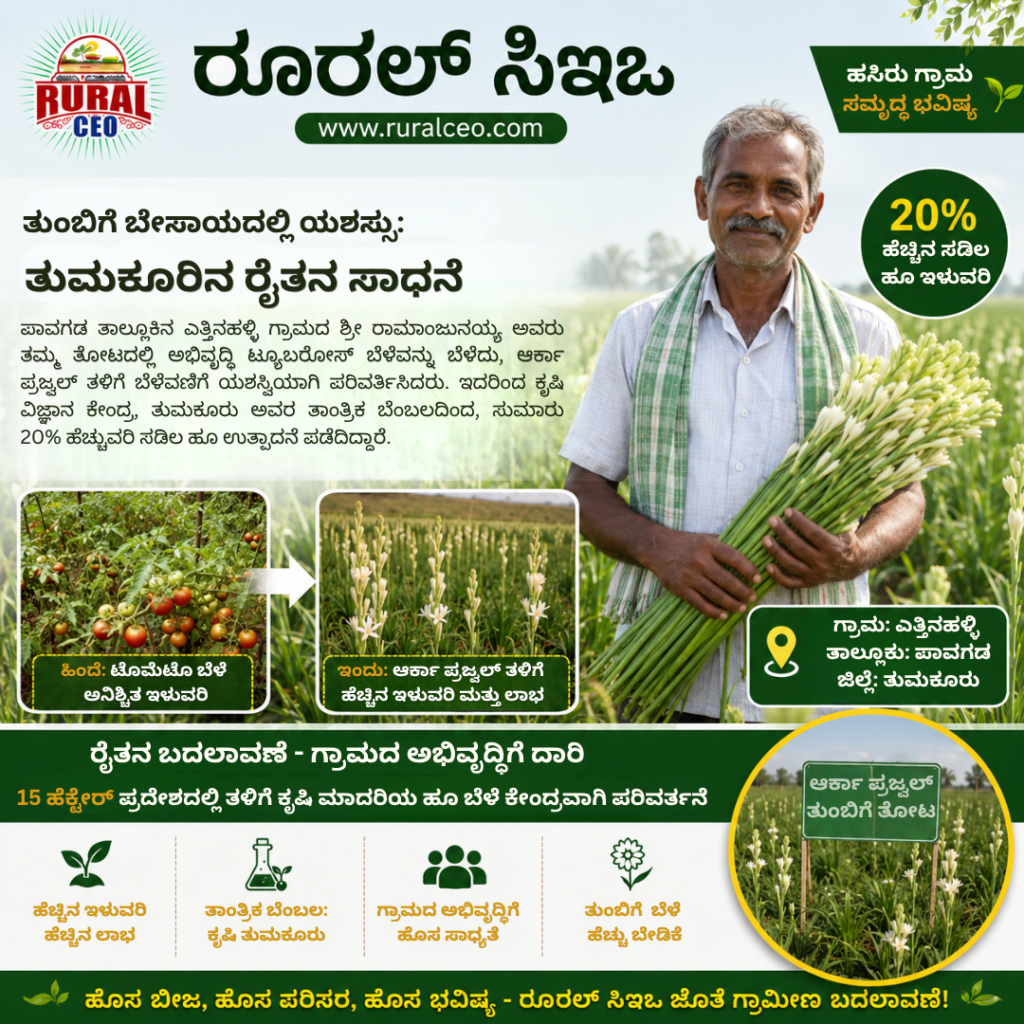
Sri Ramanjunayya, a farmer from Yettinahalli village, faced recurring losses and unstable returns from tomato farming due to fluctuating market prices and unpredictable weather conditions. Looking for a more profitable and reliable alternative, he shifted to the Arka Prajwal variety of tuberose flowers with support from the ICAR-Krishi Vigyan Kendra in Tumakuru. The result was extraordinary. He achieved nearly 20% higher loose flower yield while also improving income stability and reducing crop-related risks.
The Transformation from Tomato Farming to Floriculture
For several years, tomato farming remained the primary source of income for many farmers in the Pavagada region. However, price crashes, pest attacks, and irregular rainfall often created financial uncertainty. Sri Ramanjunayya experienced similar challenges and began searching for a crop that could provide consistent demand and better profitability.
After consulting agricultural experts and scientists from Krishi Vigyan Kendra, he decided to adopt tuberose farming using the Arka Prajwal variety. This decision completely transformed his farming journey. The switch not only improved productivity but also increased confidence in scientific agriculture practices. His Tuberose Farming Success became an inspiration for neighboring farmers who were also struggling with unstable crop returns.
The Arka Prajwal tuberose variety is known for its high flower production, attractive appearance, and strong market demand. It is especially preferred for garland making, floral decorations, and religious ceremonies across South India. These advantages made it an ideal crop for commercial flower farming.
How Scientific Farming Improved Flower Yield
The success achieved by Sri Ramanjunayya was not accidental. It was the result of proper planning, modern cultivation techniques, and continuous technical support. Agricultural experts guided him in soil preparation, irrigation management, nutrient application, and disease control methods.
The farmer adopted drip irrigation to ensure efficient water usage and maintain soil moisture. Organic manure and balanced fertilizers were used to improve plant health and flower quality. Timely pest management practices also helped reduce crop damage significantly.
Due to these scientific methods, the farm recorded approximately 20% more loose flower production compared to traditional flower cultivation practices in the region. This Tuberose Farming Success story proves that technology and expert guidance can play a major role in increasing agricultural productivity.
Rising Demand for Tuberose Flowers in India
Tuberose flowers have become one of the most profitable commercial flower crops in India. The demand remains high throughout the year because these flowers are widely used in weddings, festivals, temple offerings, and decorative events. Their pleasant fragrance and long shelf life make them highly preferred in both local and urban markets.
Karnataka has emerged as a major hub for floriculture farming due to favorable climatic conditions and increasing market access. Farmers who adopt improved flower varieties are experiencing better financial returns compared to traditional crop cultivation.
Sri Ramanjunayya’s success story highlights the economic potential of tuberose farming for small and medium-scale farmers. By focusing on quality production and market-oriented agriculture, farmers can create sustainable income opportunities in rural regions.
Economic Benefits of Tuberose Cultivation
One of the biggest advantages of tuberose farming is the consistent income flow it offers throughout the flowering season. Unlike seasonal crops that depend heavily on market fluctuations, flowers generally maintain stable demand in urban and religious markets.
Sri Ramanjunayya observed several financial benefits after shifting to tuberose farming. Production costs were comparatively manageable, while market returns improved steadily. The farmer was able to generate higher profits and reduce dependency on uncertain vegetable prices.
This Tuberose Farming Success story also encouraged other farmers in the village to explore floriculture as an alternative farming model. Gradually, the region started gaining recognition for commercial flower cultivation, creating new opportunities for rural employment and economic growth.
Role of Krishi Vigyan Kendra in Farmer Development
The support provided by ICAR-Krishi Vigyan Kendra, Tumakuru played a crucial role in this agricultural transformation. Farmers often require technical guidance to adopt new crops successfully, and KVK experts helped bridge this knowledge gap.
From selecting the right variety to implementing scientific farming techniques, the institution provided continuous assistance to ensure better outcomes. Training sessions and field demonstrations helped the farmer understand best practices in flower cultivation.
This collaborative approach between agricultural institutions and farmers is essential for rural development. When farmers receive access to research-based solutions and practical knowledge, they become more confident in experimenting with innovative farming methods.
A Model for Sustainable Rural Agriculture
Sri Ramanjunayya’s achievement is not just a personal success story. It reflects a larger transformation happening in Indian agriculture where farmers are moving toward sustainable and profitable crop systems. Floriculture farming can create long-term employment opportunities while increasing farmer income in drought-prone regions like Pavagada.
The success of tuberose farming also shows the importance of crop diversification. Depending entirely on one crop often increases financial risk, especially in changing climate conditions. By adopting alternative high-value crops, farmers can create multiple income sources and improve economic resilience.
This Tuberose Farming Success demonstrates how rural communities can progress through innovation, scientific agriculture, and market-driven farming practices.